
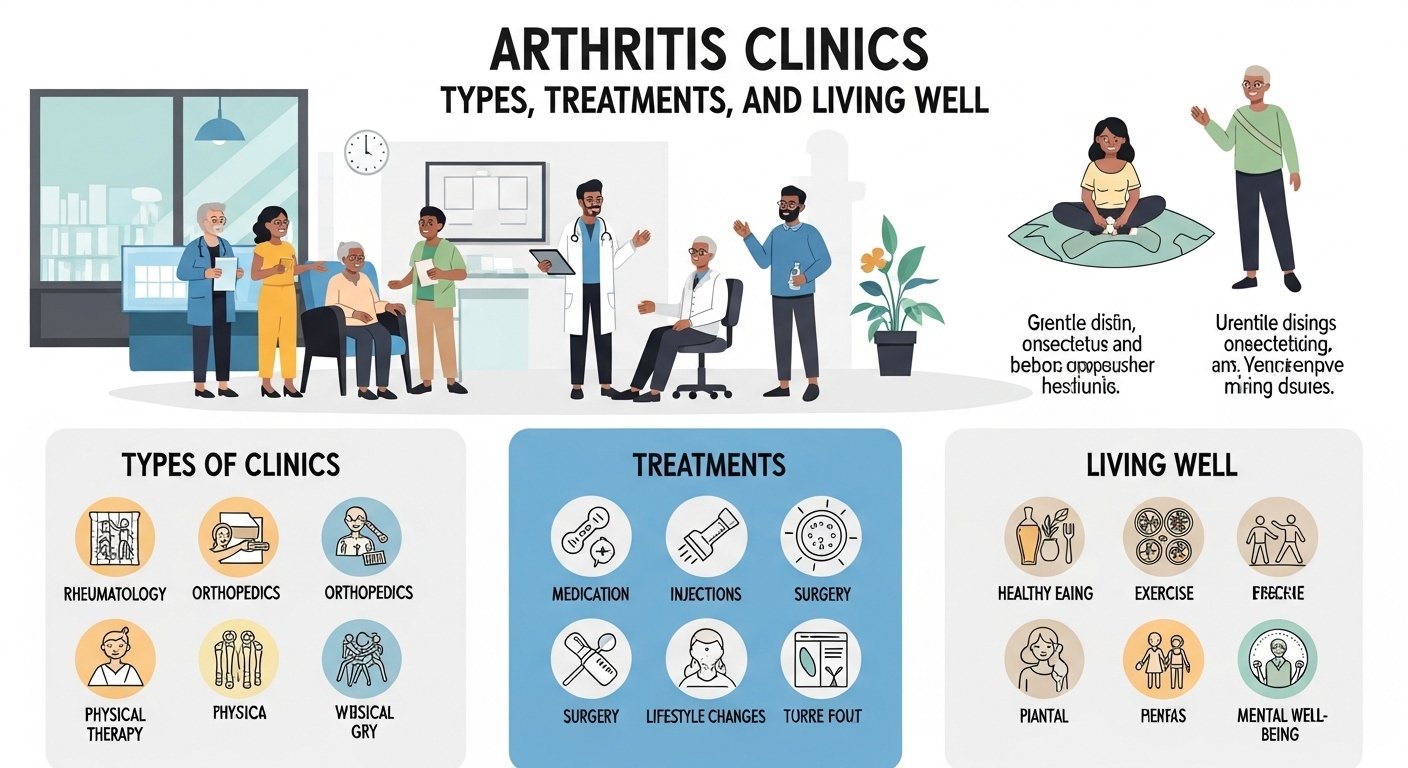

Arthritis — inflammation of one or more joints — is not a single disease but an umbrella term for over 100 conditions affecting joints, surrounding tissue, and other connective tissue. It is the leading cause of disability in the United States, affecting more than 54 million adults. Medical and rheumatology clinics provide the specialized care that effectively manages arthritis, reduces pain, preserves joint function, and helps patients maintain the quality of life that arthritis unchecked would erode. This guide explains the most common arthritis types and how clinics address them.
Osteoarthritis: The Most Common Type
Osteoarthritis (OA) is a degenerative joint disease caused by the breakdown of cartilage — the protective tissue covering bone ends within joints. It most commonly affects knees, hips, hands, and the spine. Risk factors include age, obesity, prior joint injury, and occupational joint stress. Clinic management includes NSAIDs and topical analgesics for pain, physical therapy to strengthen supporting muscles, weight management, activity modification, and joint injections. Severe OA unresponsive to conservative management is referred for joint replacement surgery.
Rheumatoid Arthritis: An Autoimmune Condition
Rheumatoid arthritis (RA) is an autoimmune disease where the immune system attacks joint lining (synovium), causing inflammation, pain, swelling, and eventually joint damage. Early, aggressive treatment with disease-modifying antirheumatic drugs (DMARDs) — particularly methotrexate — and biologic agents that target specific immune pathways prevents joint destruction and disability. RA is managed by rheumatologists with close primary care coordination.
Gout: Uric Acid Crystal Arthritis
Gout is caused by uric acid crystal deposition in joints — most commonly the big toe — producing sudden, severe attacks of joint pain, redness, and swelling. Acute attacks are treated with NSAIDs, colchicine, or corticosteroids. Long-term urate-lowering therapy (allopurinol) prevents recurrent attacks and joint damage. Diet modification (reducing purine-rich foods and alcohol) complements medication.
Conclusion
Arthritis is not an inevitable consequence of aging that must simply be endured. Modern clinic-based arthritis care provides treatments that effectively reduce pain, preserve joint function, and maintain quality of life. Whether you have OA, RA, gout, or another arthritis type, effective management begins with the right diagnosis and appropriate treatment through a knowledgeable clinical team.
FAQs – Arthritis
Q1. How does a doctor diagnose arthritis?
A: Diagnosis is based on history, physical examination, laboratory tests (rheumatoid factor, anti-CCP antibodies, uric acid, inflammatory markers), and imaging (X-rays to assess joint damage, MRI for soft tissue and early changes). Different arthritis types require different diagnostic approaches.
Q2. Is arthritis the same as joint pain?
A: Not necessarily. Joint pain has many causes beyond arthritis. The distinguishing feature of arthritis is joint inflammation — typically producing warmth, swelling, and stiffness in addition to pain. Your clinic can distinguish arthritis from other causes of joint pain.
Q3. Can diet affect arthritis?
A: Yes, particularly for gout (reducing purines, alcohol, and high-fructose foods) and for inflammatory arthritis (anti-inflammatory dietary patterns like Mediterranean diet may reduce symptom severity). Weight management through diet significantly reduces OA symptom burden.
Q4. Are steroid injections safe for arthritis?
A: Corticosteroid injections provide effective short-term pain relief for OA and inflammatory arthritis flares. Repeated injections to the same joint over time may accelerate cartilage breakdown, so their frequency is limited — typically no more than three to four times per year per joint.
Q5. What is the best exercise for arthritis?
A: Low-impact aerobic exercise (swimming, cycling, walking) and muscle-strengthening exercises that support affected joints are generally recommended. Physical therapy provides individualized exercise programs appropriate for your specific arthritis type and severity.


