
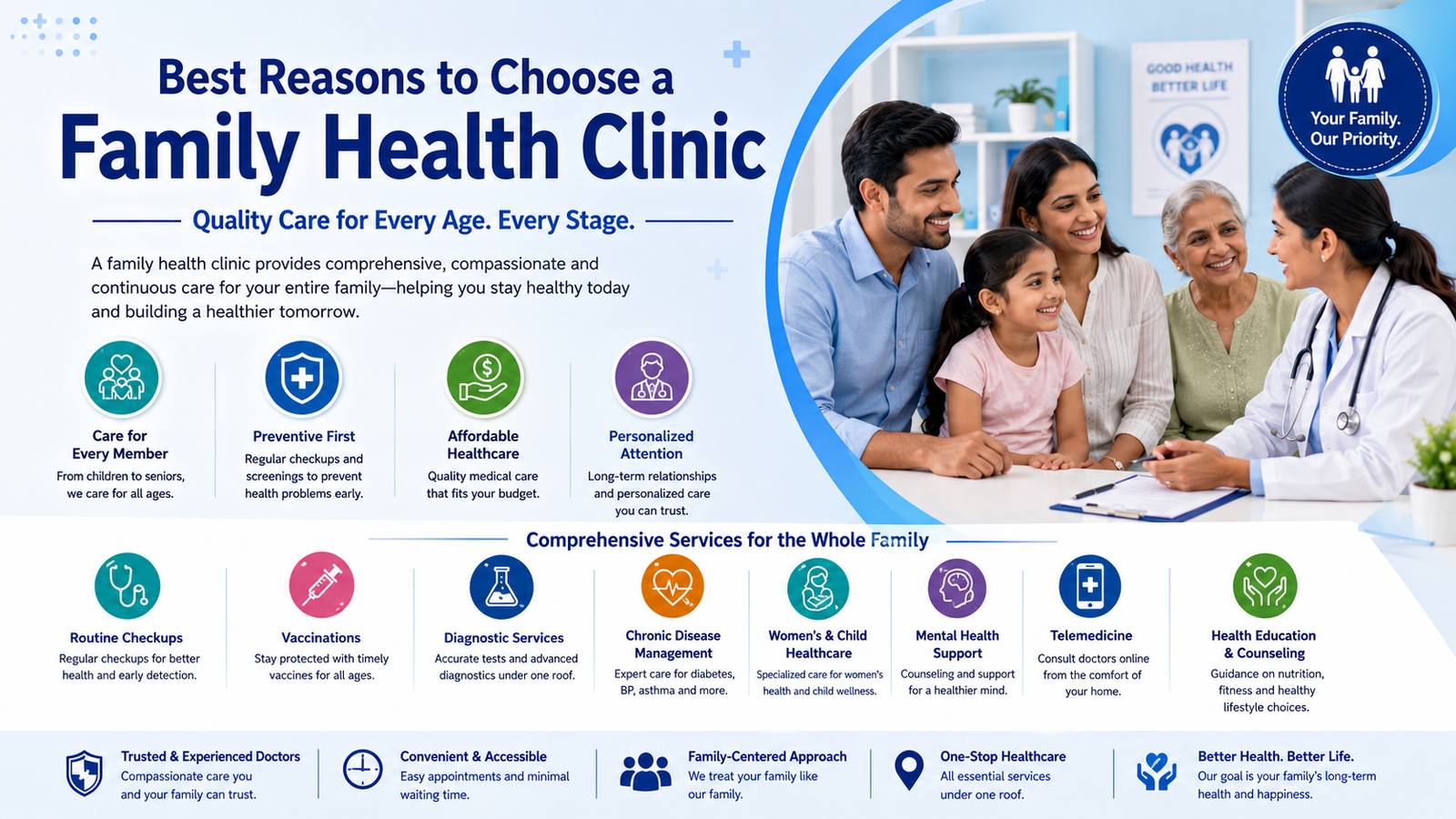

In 2026, family health clinics have become even more important because people are prioritizing preventive care, faster medical support, and personalized treatment. These clinics are designed to support long-term health for children, adults, and seniors while creating stronger patient-doctor relationships.
What Is a Family Health Clinic?
A family health clinic is a medical facility that provides healthcare services for all members of a family. It focuses on primary care, routine health services, diagnosis, and treatment for common illnesses.
Family clinics often serve:
- Children
- Teenagers
- Adults
- Seniors
This makes them convenient because multiple family members can receive care from one healthcare provider.
Family clinics emphasize continuous care and preventive health management.
Convenient Healthcare for All Ages
One major reason to choose a family health clinic is convenience.
A family clinic can provide care for every stage of life, including:
- Child vaccinations
- Adult health checkups
- Senior care
- Women’s healthcare
- General illness treatment
Instead of visiting different providers, families can receive care in one place.
This saves time and simplifies healthcare management.
Preventive Healthcare Services
Family clinics focus strongly on prevention.
Preventive services include:
- Routine checkups
- Screenings
- Vaccinations
- Health monitoring
- Lifestyle counseling
Regular preventive care helps detect health problems early.
This can improve treatment outcomes and reduce medical complications.
Personalized Medical Care
Family doctors build long-term relationships with patients. They understand personal medical history, family history, and health risks.
Personalized care means:
- Better treatment decisions
- Faster diagnosis
- Customized advice
- Improved trust
- Ongoing health support
A doctor who knows your history can provide more accurate care.
This improves patient confidence.
Early Detection of Health Problems
Routine visits to family clinics support early diagnosis.
Doctors can identify conditions such as:
- Diabetes
- High blood pressure
- Infections
- Thyroid issues
- Nutritional deficiencies
Many health conditions show mild symptoms initially.
Regular screenings help detect issues before they become serious.
Early treatment improves outcomes.
Cost-Effective Healthcare
Family clinics often provide affordable healthcare compared to hospitals.
They reduce costs through:
- Lower consultation fees
- Preventive care
- Early diagnosis
- Fewer emergency visits
Regular clinic visits can help avoid expensive hospital treatments later.
This makes healthcare more manageable for families.
Better Chronic Disease Management
Many families have members living with long-term conditions.
Family clinics help manage:
- Diabetes
- Asthma
- Hypertension
- Heart conditions
- Arthritis
Doctors monitor progress, adjust medication, and provide follow-up care.
Consistent management improves quality of life.
Access to Vaccinations
Vaccinations are a key service offered by family health clinics.
These include:
- Childhood vaccines
- Flu shots
- COVID-19 vaccines
- Travel vaccines
- Booster doses
Vaccinations protect both individuals and communities.
Easy access to vaccines supports public health.
Health Education and Counseling
Family clinics provide guidance that helps prevent illness.
Common counseling topics include:
- Nutrition
- Exercise
- Stress management
- Weight control
- Smoking cessation
Education empowers families to make healthier choices.
Preventive advice supports long-term wellness.
Continuity of Care
Continuity of care means receiving consistent treatment over time.
Benefits include:
- Better medical records
- Ongoing monitoring
- Faster diagnosis
- Improved trust
- Personalized treatment
A family clinic tracks health progress and supports long-term wellness.
This leads to better outcomes.
Emergency Support for Minor Issues
Family clinics can treat many non-serious urgent health issues.
Examples include:
- Fever
- Minor injuries
- Allergies
- Infections
- Digestive issues
Quick access prevents conditions from worsening.
It also reduces unnecessary hospital visits.
Women’s and Child Healthcare
Family clinics often provide services specifically for women and children.
Examples include:
- Prenatal care
- Child growth monitoring
- Reproductive health
- Pediatric consultations
- Nutrition advice
This supports family health at every stage.
Women and children benefit from regular care.
Mental Health Support
Modern family clinics increasingly support mental wellness.
Services may include:
- Anxiety screening
- Depression support
- Counseling
- Stress management
Mental health is an essential part of overall health.
Family clinics make these services more accessible.
Telemedicine and Online Services
In 2026, many clinics offer telemedicine.
This allows:
- Online consultations
- Follow-up visits
- Prescription renewals
- Health advice
Telemedicine is convenient for busy families.
It saves travel time and improves accessibility.
Strong Doctor-Patient Relationship
Trust is essential in healthcare.
Family clinics help patients build strong relationships with doctors through regular visits.
This creates:
- Better communication
- Honest discussions
- Improved care
- Patient comfort
A trusted doctor can provide more effective healthcare support.
Community Healthcare Support
Family clinics strengthen community health by making medical care accessible.
They contribute through:
- Preventive programs
- Public health campaigns
- Health awareness
- Vaccination drives
Community-based healthcare improves public wellness.
Conclusion
Choosing a family health clinic offers many benefits, including convenience, preventive care, personalized treatment, and affordable medical services. These clinics provide healthcare for all age groups and help families maintain long-term wellness.
In 2026, family clinics continue to evolve with digital healthcare, telemedicine, and modern diagnostic services. Regular visits can help detect health problems early, manage chronic conditions, and improve overall quality of life.
A trusted family health clinic becomes an important partner in maintaining a healthy future for every member of the family.
FAQs
1. What is a family health clinic?
A family health clinic provides medical care for people of all ages, including children, adults, and seniors.
2. Why choose a family clinic instead of a hospital?
Family clinics are often more affordable and convenient for routine healthcare and preventive services.
3. Do family clinics provide vaccinations?
Yes, most family clinics offer vaccinations for children and adults.
4. Can family clinics treat chronic diseases?
Yes, they help manage conditions like diabetes, asthma, and hypertension.
5. Are family clinics suitable for preventive care?
Yes, they are ideal for routine checkups, screenings, and maintaining long-term health.


