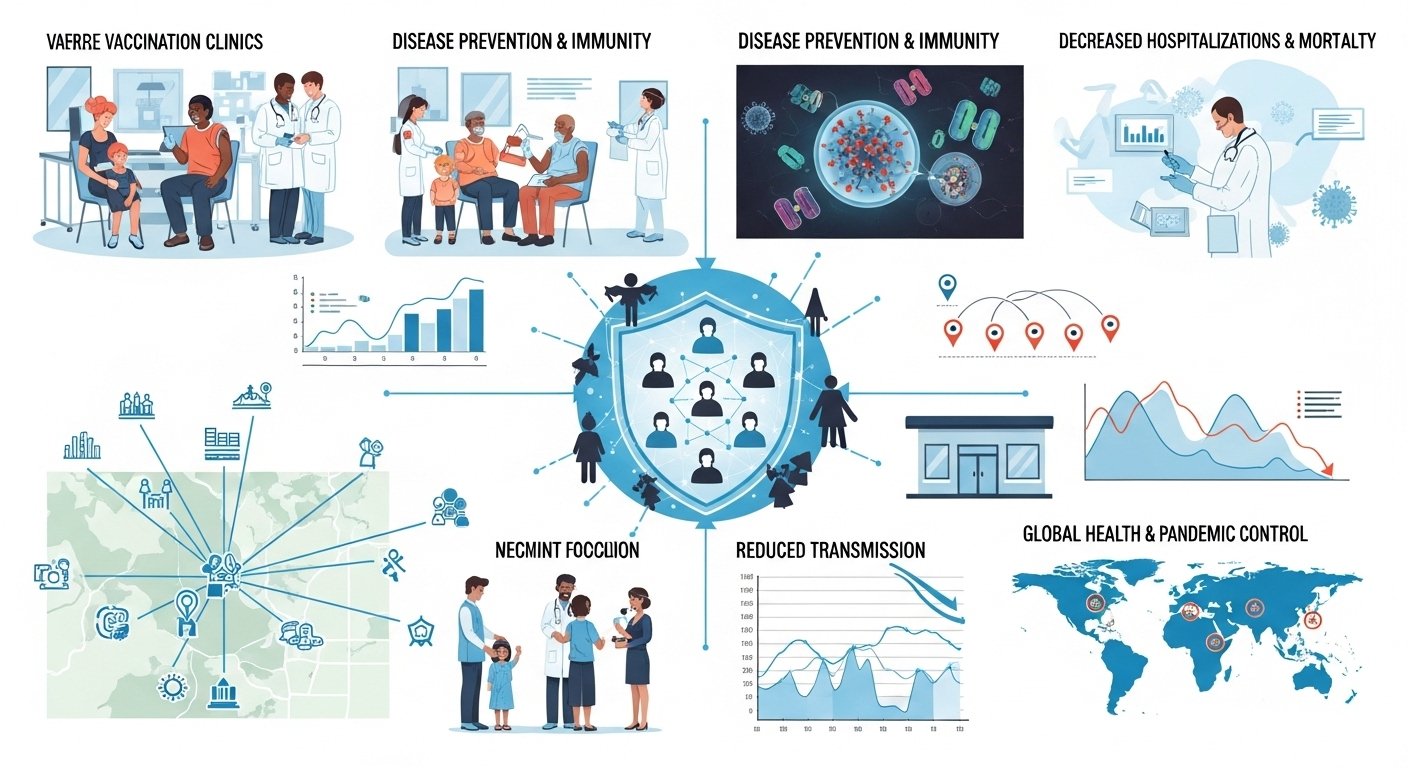

Vaccination clinics — whether dedicated immunization centers, pharmacy clinics, public health department programs, or the vaccination services offered by your primary care provider — play a fundamental role in protecting individual and community health. By immunizing a sufficient proportion of a population, vaccination clinics create “herd immunity” that protects even those who cannot be vaccinated due to age or medical conditions. This guide explains how vaccination clinics work, what they provide, and why community participation in vaccination programs matters.
The Science Behind Vaccination
Vaccines work by training your immune system to recognize and fight specific pathogens without causing the disease itself. When you receive a vaccine, your immune system develops “memory cells” that recognize the pathogen’s signature. If you are subsequently exposed to the actual disease, your immune system responds rapidly — typically preventing infection or dramatically reducing its severity. This memory is long-lasting, often lifelong for certain vaccines.
What Vaccination Clinics Provide
Vaccination clinics administer the full range of recommended immunizations, including:
- Annual influenza vaccines
- COVID-19 vaccines and boosters
- Childhood vaccination series (MMR, DTaP, Hib, PCV, IPV, Hep A and B, varicella, rotavirus)
- Adolescent vaccines (HPV, Tdap, meningococcal)
- Adult vaccines (shingles, pneumococcal, Tdap booster, hepatitis A and B for at-risk adults)
- Travel vaccines (typhoid, yellow fever, Japanese encephalitis)
Herd Immunity: Protecting the Most Vulnerable
When enough people in a community are vaccinated — typically 70–95% depending on the disease’s contagiousness — the pathogen cannot spread efficiently enough to reach those who are not immune. This protects infants too young to be vaccinated, immunocompromised patients who cannot generate vaccine responses, and others for whom vaccination is medically contraindicated. Community vaccination is therefore not just a personal health decision but an act of social responsibility.
Where to Get Vaccinated
Vaccination is available through your primary care clinic, local pharmacies (CVS, Walgreens, Rite Aid), public health department clinics, community health centers, and many employers and schools. Many vaccines can be obtained without a prescription at pharmacies. Vaccine Finder (vaccinefinder.org) helps locate nearby vaccination sites.
Conclusion
Vaccination clinics are one of the most cost-effective and life-saving components of the healthcare system. Participating in recommended vaccination programs protects you, your family, and your entire community from infectious diseases that once caused enormous suffering and death. Stay current on your recommended vaccines, ensure your children’s vaccination schedule is complete, and consider vaccination a shared responsibility for maintaining community health.
FAQs – Vaccination Clinics
Q1. Are vaccines free?
A: Most recommended childhood and adult vaccines are covered at no cost under insurance plans covered by the ACA. For uninsured patients, the Vaccines for Children (VFC) program covers childhood vaccines. Some adult vaccines are available at low or no cost through public health programs.
Q2. Do vaccines cause the flu?
A: No. Flu vaccines cannot cause influenza — they contain inactivated (killed) virus or only viral proteins, neither of which can cause infection. Mild soreness, fatigue, or low-grade fever after vaccination are normal immune responses, not the flu.
Q3. What if I missed my childhood vaccines and am now an adult?
A: Catch-up vaccination is available for adults who missed childhood immunizations or have uncertain vaccination history. Your primary care provider can review your history and provide a catch-up schedule.
Q4. Can I get multiple vaccines at the same appointment?
A: Yes. Multiple vaccines given at the same appointment are safe and effective. Combination vaccines and simultaneous administration do not overwhelm the immune system.
Q5. Are there exemptions from vaccines?
A: Medical exemptions exist for individuals with documented allergies to vaccine components or contraindications. Religious and philosophical exemptions vary by state and institution. Medical exemptions must be documented by a physician.