
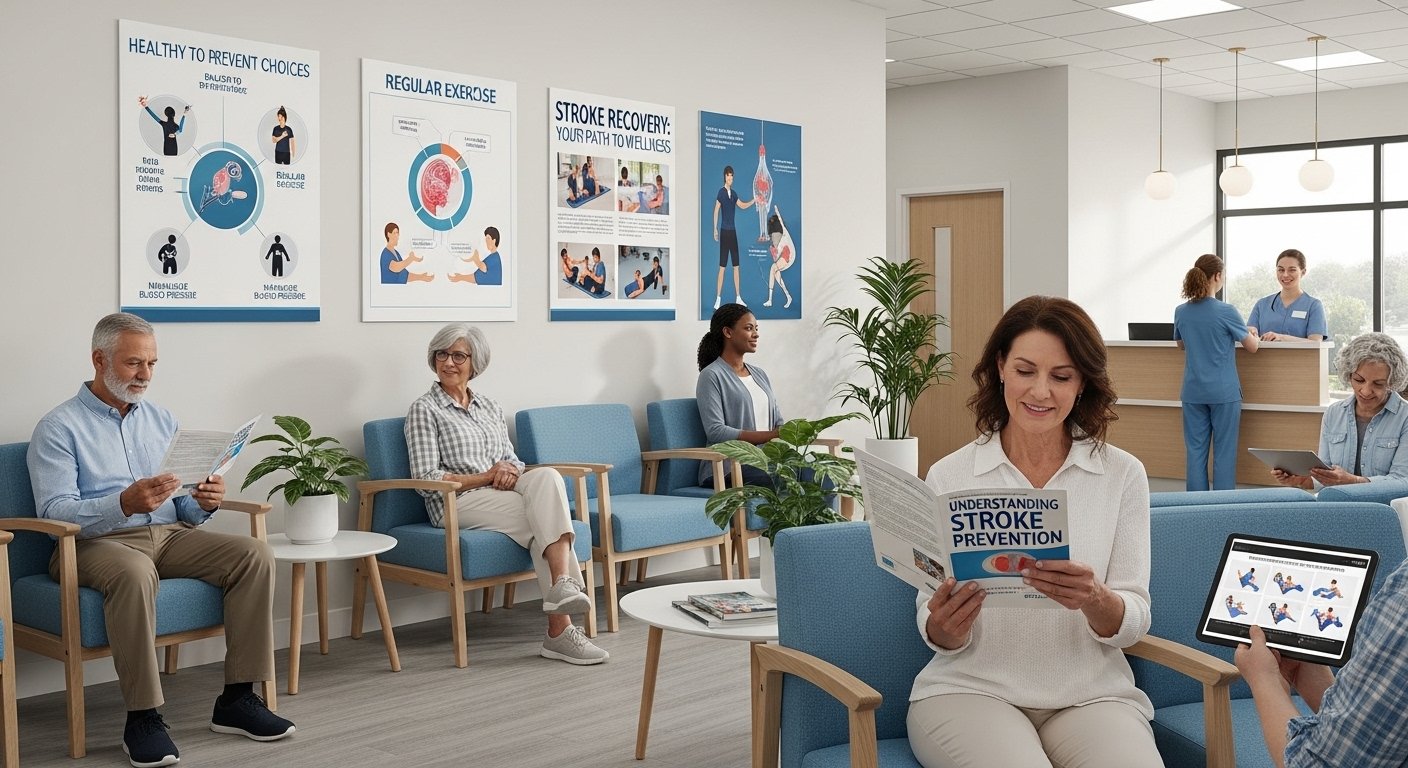

Stroke is the fifth leading cause of death in the United States and the leading cause of long-term disability — yet up to 80% of strokes are preventable through risk factor management. Medical clinics play a dual role in stroke care: preventing first strokes through proactive risk factor management, and supporting recovery after strokes occur through rehabilitation coordination and secondary prevention. This guide explains how clinics contribute to both stroke prevention and post-stroke care.
Primary Stroke Prevention at the Clinic
The primary risk factors for ischemic stroke (the most common type, caused by blood clots) are hypertension, atrial fibrillation, high cholesterol, diabetes, smoking, and obesity — all manageable through primary care. Your clinic’s comprehensive cardiovascular risk management directly reduces stroke risk. Specific preventive measures include: blood pressure control (the single most important stroke risk factor), anticoagulation for atrial fibrillation (dramatically reduces stroke risk in AF patients), lipid-lowering therapy with statins, diabetes management, smoking cessation support, and aspirin for selected high-risk patients.
Recognizing a Stroke: FAST
The FAST mnemonic identifies stroke symptoms: Face drooping (one side of face drooping or numb), Arm weakness (one arm weak or numb), Speech difficulty (slurred or strange speech), Time to call 911. Every minute during a stroke destroys approximately 1.9 million brain cells — rapid recognition and emergency response is essential. Time to treatment directly determines outcome.
Post-Stroke Recovery Care at the Clinic
After hospital discharge, primary care clinics coordinate post-stroke recovery: managing secondary prevention medications (anticoagulants, antiplatelets, statins, antihypertensives), monitoring for stroke complications (depression, cognitive impairment, seizures), coordinating rehabilitation services (physical therapy, occupational therapy, speech therapy), and providing long-term surveillance for recurrent stroke risk.
Conclusion
Stroke prevention is one of the highest-impact actions available in primary care medicine. Know your risk factors, work with your clinic to manage them aggressively, and recognize stroke symptoms that demand immediate emergency response. The most effective stroke treatment is the one never needed — because prevention succeeded.
FAQs – Stroke Prevention and Recovery
Q1. What is a TIA and how is it treated?
A: A transient ischemic attack (TIA or “mini-stroke”) produces stroke-like symptoms that resolve within 24 hours without permanent damage. A TIA is a medical emergency because it predicts a high short-term risk of major stroke — emergency evaluation and aggressive risk factor management must begin immediately.
Q2. What medications are used to prevent stroke after atrial fibrillation?
A: Oral anticoagulants (warfarin, or newer direct oral anticoagulants like apixaban, rivaroxaban, or dabigatran) dramatically reduce stroke risk in AF patients. The choice of agent depends on kidney function, fall risk, adherence, and cost.
Q3. How long does stroke recovery take?
A: Recovery varies enormously based on stroke severity and location. Most improvement occurs in the first three to six months, but neurological recovery can continue for years with ongoing rehabilitation. Some deficits may be permanent.
Q4. Can young people have strokes?
A: Yes. Though stroke is more common in older adults, approximately 10–15% of strokes occur in people under 45. Risk factors in younger patients include undiagnosed heart conditions, blood clotting disorders, drug use (particularly stimulants), and migraines with aura.
Q5. Does aspirin prevent stroke?
A: Low-dose aspirin reduces ischemic stroke risk in patients who have already had a stroke or TIA (secondary prevention) or who have high cardiovascular risk. For primary prevention in low-risk individuals, current guidelines do not generally recommend aspirin due to its bleeding risk. Discuss with your doctor.


