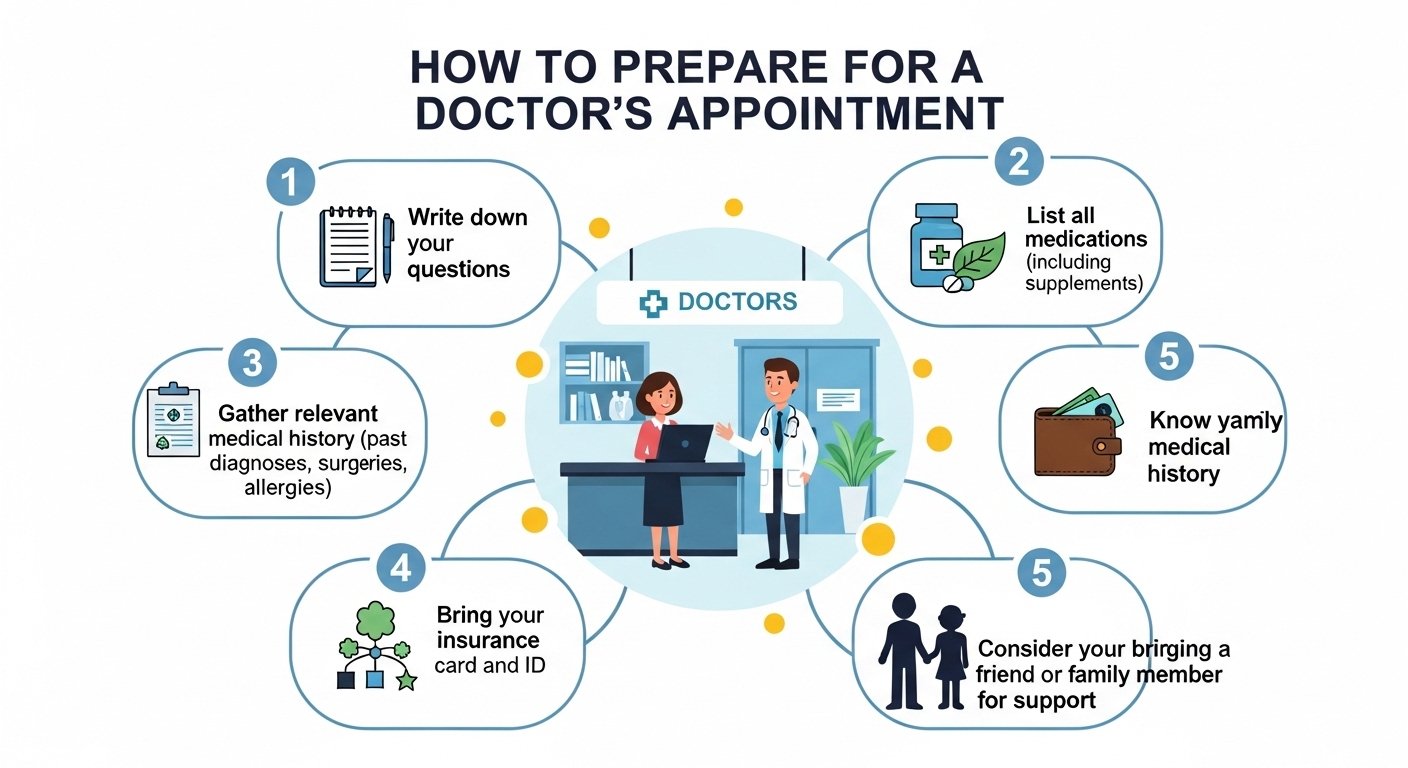

A well-prepared doctor’s appointment is dramatically more productive than an improvised one. When you arrive organized, with your health history accurate, your questions written, and your goals clear, your doctor can spend your limited time together actually addressing your needs rather than gathering basic information. Studies consistently show that patients who prepare for appointments receive better, more personalized care. This guide gives you a simple, effective preparation process for your next clinic visit.
Before the Appointment: Preparation Checklist
Write Down Your Main Concern
Identify the one to three health issues you most need to address at this appointment. Rank them by priority. This helps you ensure that your most important concern is addressed even if time runs short — and prevents the common “by the way” phenomenon, where the most important concern is mentioned as you are walking out the door.
Document Your Symptoms
For each concern, describe the symptom specifically: when it started, how often it occurs, what makes it better or worse, whether anything similar has happened before, and what self-treatment you have tried. The more specific your symptom description, the more efficiently your doctor can diagnose and treat it.
List All Medications and Supplements
Write down every prescription medication, over-the-counter drug, vitamin, and herbal supplement you take, including doses and frequency. Many patients are surprised by how often they forget medications under the pressure of an appointment — a written list ensures nothing is missed.
Bring Relevant Records
If you have been seen by other providers for the same concern, bring any relevant records, test results, or imaging reports. Your doctor cannot coordinate your care effectively without knowing what has already been done.
During the Appointment
State your main concern at the start of the appointment — not the end. If you need something specific (a referral, a prescription refill, a work excuse note), mention it early so the appointment can be structured to ensure it happens. Take brief notes during the appointment or ask permission to record the discussion so you can review instructions later. Ask questions when you do not understand — your doctor’s job is to help you understand your health, not to talk at you.
Conclusion
Preparing for a doctor’s appointment is a 15-minute investment that makes the entire appointment more efficient, more productive, and more likely to result in care that genuinely addresses your needs. Write your concerns and questions in advance, bring your medication list, state your priorities clearly at the start of the visit, and leave with a clear understanding of next steps. Your preparation is the most effective thing you can do to improve the quality of your own healthcare.
FAQs – Preparing for a Doctor’s Appointment
Q1. How many concerns can I address in a single appointment?
A: Most primary care appointments are 15–30 minutes. Realistically, one to three concerns can be addressed adequately in that time. For complex or multiple issues, consider requesting a longer appointment when scheduling.
Q2. Should I tell my doctor about symptoms I think are embarrassing?
A: Yes, always. Doctors are trained to discuss any medical concern without judgment. Sexual health issues, mental health symptoms, digestive complaints, and other topics patients find embarrassing are among the most important for your doctor to know about.
Q3. Can I bring a family member or friend to take notes?
A: Yes. Research shows that patients retain more medical information when accompanied by a support person who can also listen and remember what the doctor says. Bring someone you trust, especially for complex or difficult appointments.
Q4. What if my doctor doesn’t address everything on my list?
A: Schedule a follow-up appointment for remaining concerns. Do not wait until your next routine visit if a concern is clinically significant — it is appropriate to make an additional appointment specifically to address it.
Q5. Should I research my symptoms before the appointment?
A: Light research to understand your symptoms and formulate questions is helpful. Avoid convincing yourself of a specific diagnosis before your doctor evaluates you — patients who arrive with a firm self-diagnosis sometimes resist more accurate clinical assessment.