
Most people know that medical clinics treat colds, perform physicals, and manage chronic conditions like diabetes. But modern clinics — especially comprehensive primary care and multispecialty practices — offer a much broader range of services than most patients realize. Knowing what your clinic offers helps you access care more efficiently, avoid unnecessary referrals, and take fuller advantage of the resources already available to you. This guide covers common clinic services that many patients do not know about.
Behavioral and Mental Health Services
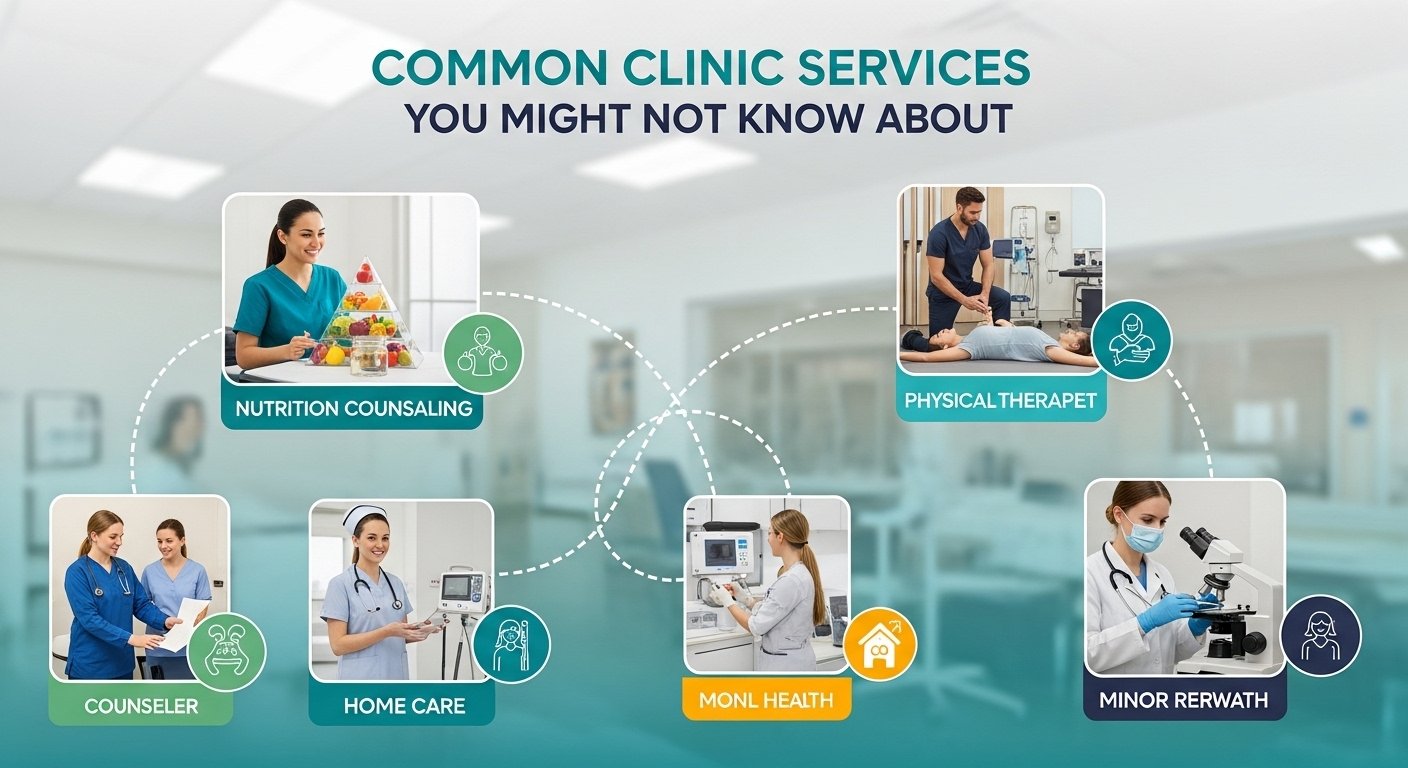
Many primary care clinics now integrate behavioral health providers — social workers, psychologists, or counselors — directly into their practice. This allows patients to address mental health concerns (depression, anxiety, grief, relationship problems) in the same setting as their physical health care, reducing stigma and improving access. Ask your clinic whether they have behavioral health services or can provide a warm referral to a behavioral health partner.
Nutritional Counseling
Registered dietitians work in many clinical settings to help patients manage weight, address nutritional deficiencies, and develop eating patterns that support chronic disease management. Patients with diabetes, heart disease, kidney disease, eating disorders, or significant weight concerns can often receive dietitian consultation directly through their clinic — sometimes covered by insurance.
Minor Procedures
Clinics perform many minor procedures that patients often assume require a hospital or specialist. Common in-clinic procedures include:
- Wound care and suture placement
- Skin biopsy and mole removal
- Joint injections (corticosteroid injections for arthritis)
- Cerumen (earwax) removal
- IUD and implant insertion and removal
- Cryotherapy (freezing warts or precancerous skin lesions)
- Splinting and casting for minor fractures
Social Work and Care Coordination
Many clinics employ social workers or case managers who help patients navigate complex healthcare systems, access community resources, apply for assistance programs, coordinate transportation to appointments, and address social determinants of health — housing, food security, and income — that directly affect health outcomes.
Pharmacy Services
Some larger clinics have in-clinic pharmacies or pharmacist staff who review medications for interactions, counsel patients on proper use, and sometimes dispense common medications directly — reducing the need for a separate pharmacy trip and improving medication adherence.
Conclusion
Your medical clinic may offer far more than you know. Talk to your primary care provider, ask the front desk staff, or explore your clinic’s website to discover the full range of services available to you. Using your clinic comprehensively — for behavioral health, nutrition, minor procedures, social work support, and pharmacy services — often produces better, more integrated, and more convenient healthcare than seeking each service separately.
FAQs – Medical Clinic Services
Q1. Does my clinic offer same-day appointments?
A: Many primary care clinics reserve a portion of their daily schedule for same-day sick visits. Call the clinic first thing in the morning if you need to be seen the same day — these slots fill quickly.
Q2. Can I get a physical therapy referral at my clinic?
A: Yes. Your primary care doctor can provide referrals to physical therapy for musculoskeletal conditions, post-surgical rehabilitation, and chronic pain management.
Q3. Does my clinic offer lab draws on-site?
A: Many clinics have an on-site phlebotomist who draws blood for lab tests ordered by your provider. Others use an external lab — your doctor will specify where to go for your blood draw.
Q4. Can I get imaging (X-ray, ultrasound) at my clinic?
A: Some larger clinics have on-site radiology services. Others provide orders for imaging at affiliated imaging centers. Your doctor will order and coordinate the appropriate imaging study.
Q5. Are there clinic services specifically for patients without insurance?
A: Community health clinics and Federally Qualified Health Centers (FQHCs) provide comprehensive primary care services on a sliding fee scale for uninsured and underinsured patients. Find your nearest FQHC at findahealthcenter.hrsa.gov.