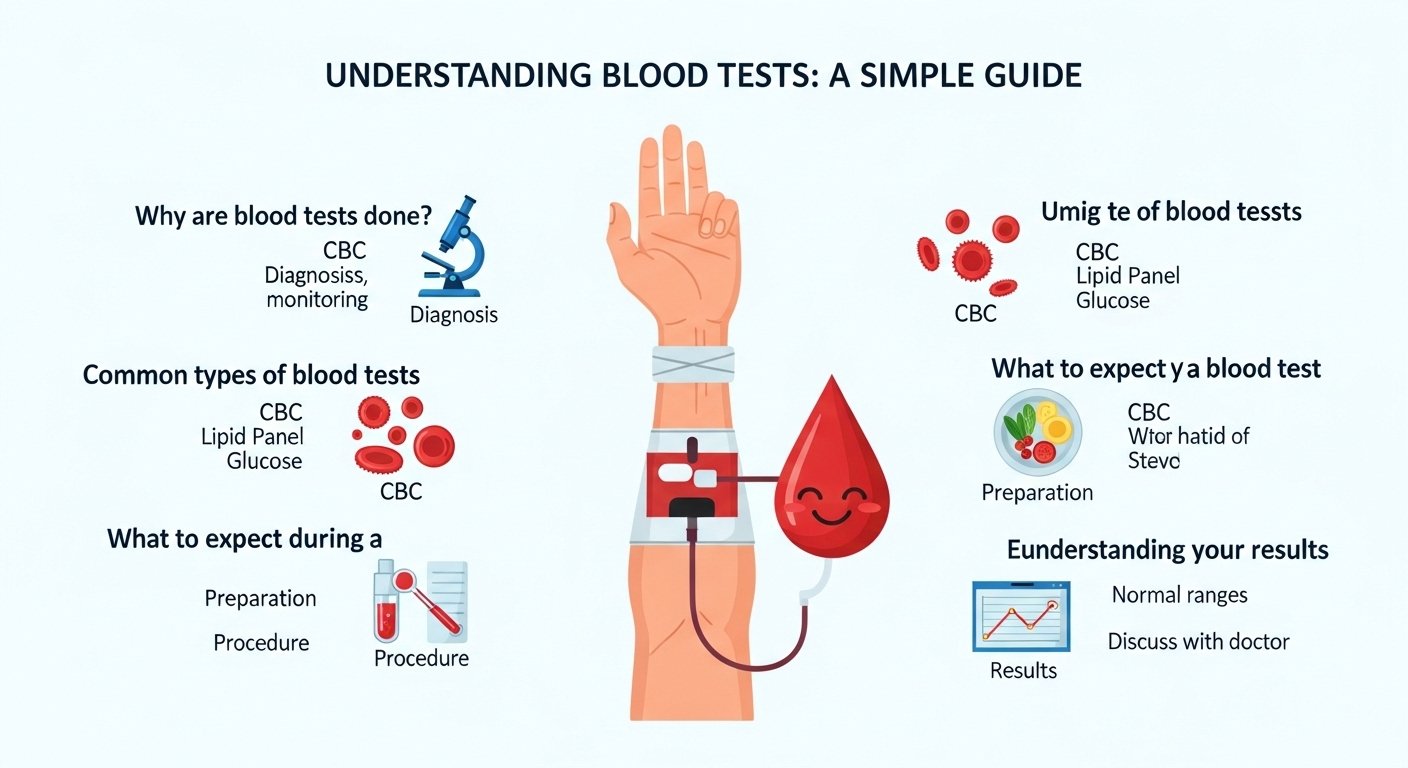

Blood tests are among the most powerful and commonly used diagnostic tools in medicine — yet for many patients, receiving a lab order or reviewing results can feel bewildering. Understanding the most common blood tests, what they measure, why they are ordered, and how to interpret the basic concepts makes you a more informed and less anxious participant in your own healthcare. This guide explains blood tests in simple, accessible language.
Why Blood Tests Are So Useful
Blood circulates through every organ in your body, collecting information as it goes. Markers released by organs under stress, chemicals that reflect metabolic processes, and cells produced by your immune system all appear in your blood. By analyzing these components, doctors gain a window into the health of your liver, kidneys, thyroid, bone marrow, immune system, cardiovascular system, and much more — without any invasive procedure beyond a simple needle draw.
The Most Common Blood Tests Explained
Complete Blood Count (CBC)
The CBC is one of the most frequently ordered tests, measuring the quantity and quality of red blood cells, white blood cells, and platelets. Elevated white cells may indicate infection or inflammation. Low red cells or hemoglobin indicates anemia. Abnormal platelets may suggest clotting disorders. The CBC provides an immediate snapshot of blood cell health.
Comprehensive Metabolic Panel (CMP)
The CMP measures 14 substances that reflect the health of your kidneys (creatinine, BUN), liver (ALT, AST, bilirubin, albumin), electrolyte balance (sodium, potassium, chloride, bicarbonate), and blood glucose. It is routinely ordered at annual physicals and when monitoring medication effects on organ function.
Lipid Panel
Measuring total cholesterol, LDL (low-density lipoprotein — the “bad” type that builds up in arteries), HDL (high-density lipoprotein — the “good” type that removes cholesterol from arteries), and triglycerides (blood fats linked to diet and metabolism), the lipid panel assesses cardiovascular disease risk.
Thyroid-Stimulating Hormone (TSH)
TSH is produced by the pituitary gland to regulate the thyroid’s hormone production. A high TSH suggests an underactive thyroid (hypothyroidism); a low TSH suggests an overactive thyroid (hyperthyroidism). Both conditions are common, especially in women, and both are highly treatable.
HbA1c (Glycated Hemoglobin)
HbA1c measures your average blood sugar over the previous two to three months — making it far more useful for assessing blood sugar control than a single glucose measurement. It is the primary test used to diagnose and monitor diabetes and prediabetes.
The Blood Draw Process
A phlebotomist (blood draw specialist) or nurse typically draws blood from a vein in your inner elbow. The process takes a few minutes, involves a brief pinch, and rarely causes more than minor discomfort. Results are typically available within 24 to 72 hours, delivered through your patient portal or discussed at a follow-up appointment.
Conclusion
Blood tests provide extraordinary medical insight from a relatively simple procedure. Understanding what the most common tests measure helps you engage more meaningfully with your results and have more productive conversations with your doctor. When your results arrive, review them in the context of your reference ranges, note any values outside the normal range, and discuss their clinical significance with your provider at your next appointment or through your patient portal.
FAQs – Understanding Blood Tests
Q1. Do blood tests hurt?
A: Most patients describe the blood draw as a brief pinch or sting lasting just a second. If you have a strong aversion to needles, let the phlebotomist know — they can take steps to make the experience more comfortable, including numbing cream or butterfly needles for difficult veins.
Q2. How long should I fast before a blood test?
A: Standard fasting for most metabolic panels and lipid panels is 8–12 hours. Drink water during the fast — it does not affect results and helps make veins easier to access. Ask your doctor’s office for specific fasting instructions for your ordered tests.
Q3. Can I take my medications before a blood draw?
A: Unless your doctor instructs otherwise, take your regular medications as usual before a blood draw. Some specific tests require medication adjustments — ask your ordering provider for instructions.
Q4. What causes low hemoglobin?
A: Low hemoglobin (anemia) can result from iron deficiency, vitamin B12 or folate deficiency, chronic disease, kidney disease, blood loss, or bone marrow disorders. Your doctor will investigate the cause based on the pattern of CBC abnormalities and additional tests.
Q5. How accurate are blood tests?
A: Modern laboratory blood tests are highly accurate when collected and processed correctly. Some degree of laboratory variability exists, and a single result may occasionally be inaccurate — which is why abnormal results are often repeated before clinical decisions are made.