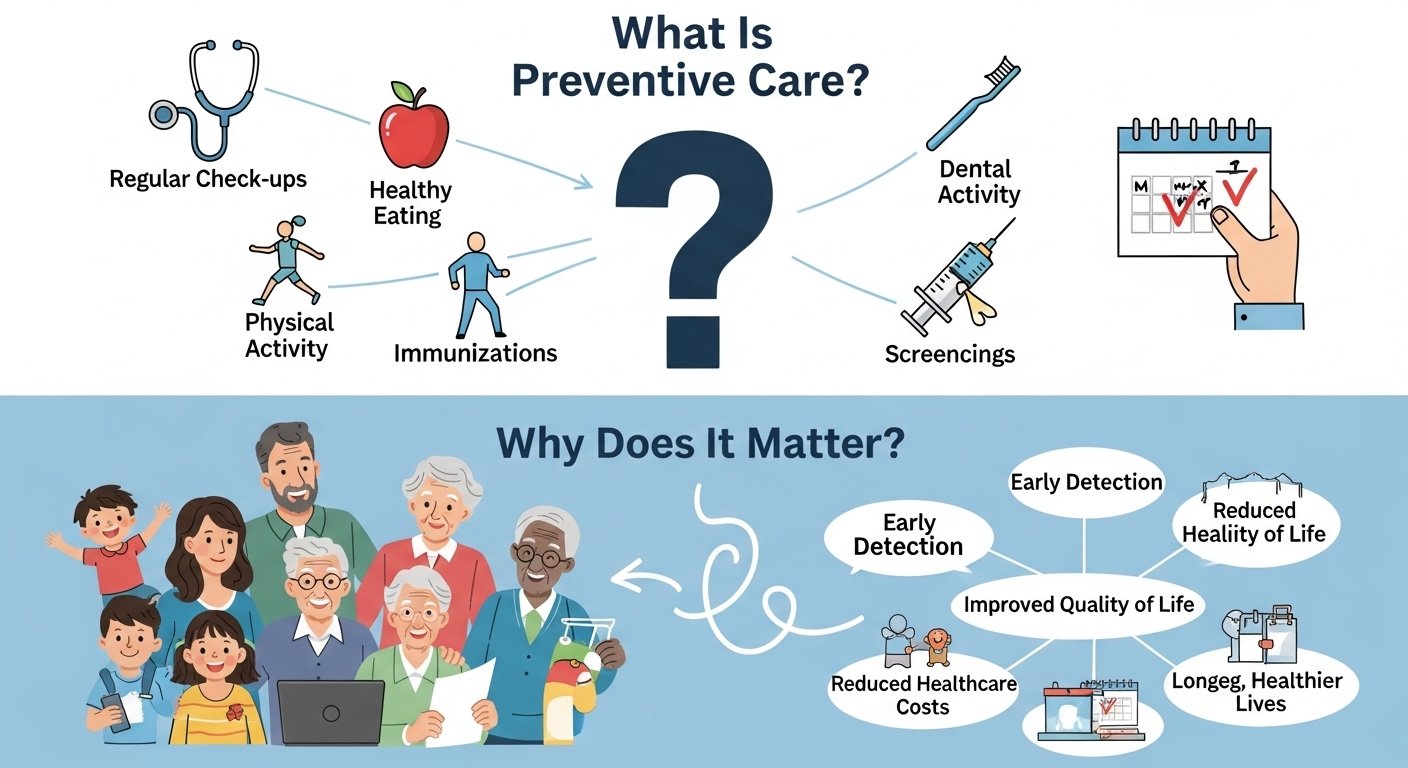

Preventive care is healthcare designed to prevent illness, detect conditions before they cause symptoms, and maintain the health of people who feel well. It is the part of medicine that says “let’s make sure you stay healthy” rather than “let’s treat what’s wrong.” Despite being one of the most cost-effective and life-extending forms of healthcare available, preventive care remains underutilized by millions of people who only see a doctor when something is already wrong. This guide explains what preventive care is, what it includes, and why it matters more than most people realize.
Three Levels of Preventive Care
Primary Prevention
Primary prevention aims to prevent a condition from developing at all. Vaccinations that prevent infectious diseases, counseling on healthy diet and exercise to prevent obesity and cardiovascular disease, and education about smoking cessation to prevent lung cancer are all primary prevention measures. This is healthcare’s first line of defense — stopping problems before they start.
Secondary Prevention
Secondary prevention involves screening for conditions in people who have no symptoms — detecting disease in its early, most treatable stage. Mammograms, colonoscopies, Pap smears, blood pressure checks, and cholesterol screening are all secondary prevention. These tests find conditions that would cause no symptoms for years but are already developing — giving medical treatment its best chance to intervene effectively.
Tertiary Prevention
Tertiary prevention manages existing disease to prevent complications, deterioration, and further harm. Cardiac rehabilitation after a heart attack, diabetes management programs to prevent organ damage, and physical therapy after injury all represent tertiary prevention — not curing disease but preventing it from causing additional harm.
Key Preventive Services Covered by Insurance
Under the Affordable Care Act, most insurance plans must cover preventive services with no cost-sharing when delivered by in-network providers. These include blood pressure and cholesterol screening, adult and childhood immunizations, cancer screenings (mammogram, colonoscopy, Pap smear, lung cancer CT for smokers), depression screening, obesity counseling, and many more. Taking advantage of these free services is one of the most financially sound health decisions available.
The Economic Case for Prevention
Treating a disease costs far more than preventing it. A colonoscopy that detects and removes a precancerous polyp costs several hundred dollars; treating the colorectal cancer that would have developed from that polyp costs tens of thousands. Controlling blood pressure with inexpensive medication costs a fraction of treating the heart attack or stroke that uncontrolled hypertension eventually causes. Preventive care is not just good medicine — it is good economics.
Conclusion
Preventive care is the medicine of the future — stopping disease before it starts, catching it before it progresses, and managing it before it causes serious complications. It is available, largely free through your insurance, and waiting for you to take advantage of it. Schedule your annual physical, stay current on screenings appropriate to your age and risk factors, and talk to your doctor about what preventive measures make sense for your specific health profile.
FAQs – Preventive Care
Q1. What preventive screenings should I have at age 50?
A: At 50, standard preventive screenings typically include colorectal cancer screening, continued mammograms for women, continued Pap smears for women, lung cancer screening (for smokers), regular blood pressure and cholesterol checks, diabetes screening, and a discussion with your doctor about bone density testing and other age-appropriate measures.
Q2. Is preventive care different from a sick visit?
A: Yes. A preventive visit (annual physical) focuses on maintaining health and early detection. A sick visit addresses a specific illness or concern. Combining both in one appointment may result in cost-sharing charges — check with your insurer about their billing policies.
Q3. Are mental health screenings part of preventive care?
A: Yes. Depression screening for adults and adolescents is a recommended preventive service covered by most insurance plans at no cost. Anxiety screening is increasingly included as well.
Q4. Can men get preventive care too?
A: Absolutely. Preventive services for men include blood pressure and cholesterol screening, colorectal cancer screening, diabetes screening, testicular and prostate cancer discussions, and immunizations. Men are historically less likely to seek preventive care than women — a disparity with real health consequences.
Q5. What preventive care is recommended for children?
A: Children’s preventive care includes well-child visits on a AAP-recommended schedule, developmental screenings, vision and hearing screening, immunizations, dental referrals, and nutrition and safety counseling appropriate to age.