
Your eyes are among the most complex and vital organs in your body — and your vision is the sense most people say they would be most devastated to lose. Yet eye health is frequently neglected until vision problems become undeniable. Eye clinics provide specialized care that not only corrects vision but detects serious systemic diseases, prevents irreversible vision loss, and maintains the quality of sight that enriches every aspect of daily life. This guide explains what eye clinics offer and why regular eye care matters far beyond getting a glasses prescription.
Types of Eye Care Providers
Optometrists
Optometrists (OD) perform comprehensive eye exams, prescribe corrective lenses, diagnose common eye conditions, prescribe eye medications, and manage many eye diseases. They are the primary care providers of eye health and the right starting point for most vision and eye health concerns.
Ophthalmologists
Ophthalmologists are medical doctors (MD or DO) specializing in eye and vision care. They perform eye exams, diagnose and treat eye diseases, and perform eye surgery — including cataract surgery, LASIK, glaucoma surgery, and retinal repair.
What Happens During a Comprehensive Eye Exam
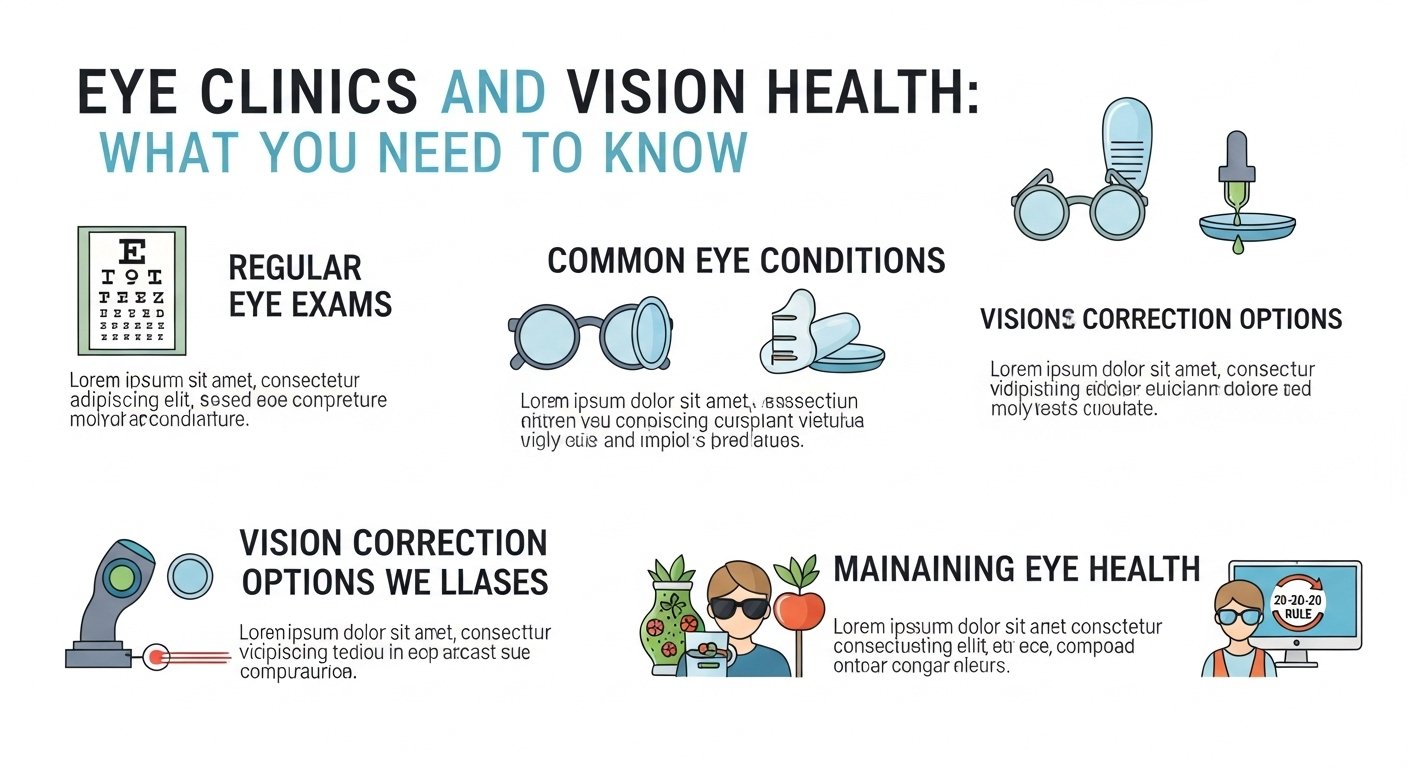
A comprehensive eye exam includes visual acuity testing (the standard letter chart), refraction (determining your lens prescription), eye pressure measurement (screening for glaucoma), examination of the front of the eye (slit lamp exam), and dilation of the pupils to examine the retina and optic nerve. The dilated exam is essential for detecting diabetic retinopathy, macular degeneration, glaucoma, and retinal detachment — all conditions that can cause permanent vision loss if not detected early.
Eye Health and Systemic Disease
The retina is the only place in the body where blood vessels can be directly visualized without invasive procedures. This makes eye exams a window into systemic vascular health. Diabetic retinopathy, hypertensive changes, signs of multiple sclerosis, and even brain tumors can be detected through a dilated eye exam. Eye clinics are therefore not just vision care providers — they are frontline detectors of systemic disease.
Conclusion
Eye clinics provide essential healthcare that goes far beyond prescribing glasses. Regular comprehensive eye exams — annually for most adults, more frequently for those with diabetes or known eye conditions — protect your vision, detect systemic disease early, and ensure that the irreplaceable sense of sight is maintained throughout your life. Do not wait for noticeable vision changes to schedule your eye exam.
FAQs – Eye Clinics
Q1. How often should adults get an eye exam?
A: Most adults should have a comprehensive eye exam every one to two years. Adults over 60, diabetic patients, and those with known eye conditions or risk factors for glaucoma may need annual exams.
Q2. Do I need an eye exam even if I don’t wear glasses?
A: Yes. Many serious eye conditions — glaucoma, macular degeneration, diabetic retinopathy — cause no symptoms in their early stages. A comprehensive eye exam detects these conditions before they cause irreversible damage.
Q3. Is LASIK surgery safe?
A: LASIK is one of the most commonly performed elective surgeries and has an excellent safety record when performed on appropriate candidates by experienced surgeons. A comprehensive pre-surgical evaluation determines whether you are a suitable candidate.
Q4. What is glaucoma?
A: Glaucoma is a group of eye conditions that damage the optic nerve, typically due to elevated eye pressure. It is a leading cause of preventable blindness. It produces no symptoms in its early stages — regular eye pressure measurement is the primary screening tool.
Q5. Are children’s eye exams important?
A: Critically so. Untreated childhood vision problems (including amblyopia, or “lazy eye”) can cause permanent visual impairment if not treated during the critical developmental window. Children should have eye exams before starting school and regularly thereafter.