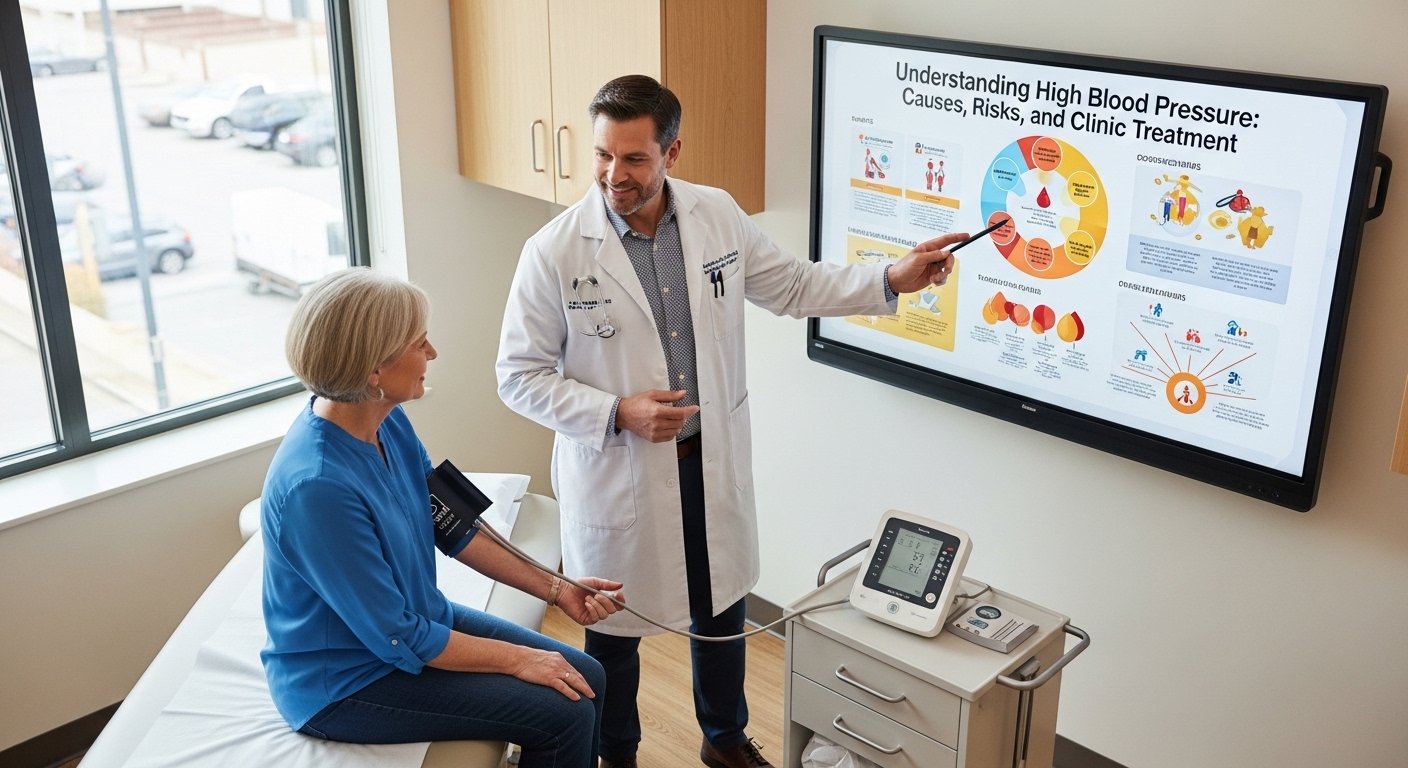

High blood pressure — or hypertension — is called the “silent killer” for good reason. It produces no symptoms in the vast majority of people who have it, yet silently damages blood vessels, the heart, kidneys, and brain for years before causing a heart attack, stroke, kidney failure, or other catastrophic event. It affects nearly half of all American adults and remains undertreated in a large proportion of those diagnosed. Medical clinics are the frontline of hypertension detection, management, and long-term control.
What Is High Blood Pressure?
Blood pressure is measured in two numbers: systolic (the pressure when your heart beats, the upper number) and diastolic (the pressure between beats, the lower number). Normal blood pressure is below 120/80 mmHg. Elevated blood pressure is 120–129/below 80. Stage 1 hypertension is 130–139/80–89. Stage 2 hypertension is 140 or higher/90 or higher. A hypertensive crisis requiring immediate medical attention is above 180/120.
Causes and Risk Factors
Primary hypertension — the most common form — has no single identifiable cause but is strongly associated with age, family history, obesity, physical inactivity, high sodium diet, excessive alcohol use, and stress. Secondary hypertension has an identifiable cause — kidney disease, hormonal disorders, or certain medications (including NSAIDs, decongestants, and oral contraceptives). Your clinic screens for secondary causes in patients with difficult-to-control or early-onset hypertension.
How Clinics Diagnose and Monitor Hypertension
Hypertension is diagnosed based on at least two elevated blood pressure readings taken at separate clinic visits. Clinics may recommend home blood pressure monitoring to distinguish true hypertension from “white coat hypertension” (elevated readings only in clinical settings) and to assess blood pressure control between visits. Ambulatory blood pressure monitoring (a device worn for 24 hours) provides the most comprehensive picture of blood pressure throughout the day.
Treatment: Lifestyle and Medication
Lifestyle modifications are the foundation of hypertension management: reducing sodium intake, following the DASH diet, regular aerobic exercise (150 minutes per week), achieving and maintaining healthy weight, limiting alcohol, and quitting smoking can reduce systolic blood pressure by 4–11 mmHg through each individual measure. When lifestyle changes are insufficient, your clinic prescribes antihypertensive medications — typically thiazide diuretics, ACE inhibitors, ARBs, or calcium channel blockers, selected based on your other health conditions and tolerability.
Conclusion
Hypertension is common, controllable, and dangerous when left unmanaged. Know your blood pressure numbers, attend regular clinic monitoring, adhere to prescribed medications, and commit to the lifestyle modifications that reduce cardiovascular risk. The clinic is your partner in preventing the devastating complications of uncontrolled hypertension — but only if you show up and engage.
FAQs – High Blood Pressure
Q1. Can hypertension be cured?
A: Primary hypertension is a chronic condition that typically requires lifelong management rather than cure. With significant lifestyle changes, some patients achieve blood pressure control without medication. Secondary hypertension caused by a treatable underlying condition may resolve when that condition is corrected.
Q2. At what blood pressure should I go to the emergency room?
A: A reading above 180/120 mmHg with symptoms (chest pain, shortness of breath, severe headache, vision changes, neurological symptoms) is a hypertensive emergency requiring immediate emergency care. Without symptoms, call your doctor for same-day evaluation.
Q3. Does high blood pressure cause symptoms I would notice?
A: Usually no — which is why it is called the “silent killer.” Some people report headaches or nosebleeds with very high readings, but most hypertensive patients have no symptoms until complications develop. Regular monitoring is the only reliable detection method.
Q4. How accurate are home blood pressure monitors?
A: Validated upper-arm cuff monitors are generally accurate when used correctly. Follow instructions carefully, measure in a consistent position (seated, after 5 minutes of rest), and bring your home monitor to clinic visits to calibrate against the clinic’s equipment.
Q5. How long do I need to take blood pressure medication?
A: Most patients require long-term or lifelong medication, because stopping typically causes blood pressure to return to elevated levels. Some patients successfully reduce or eliminate medication after sustained significant weight loss and lifestyle improvement — always under physician supervision.