
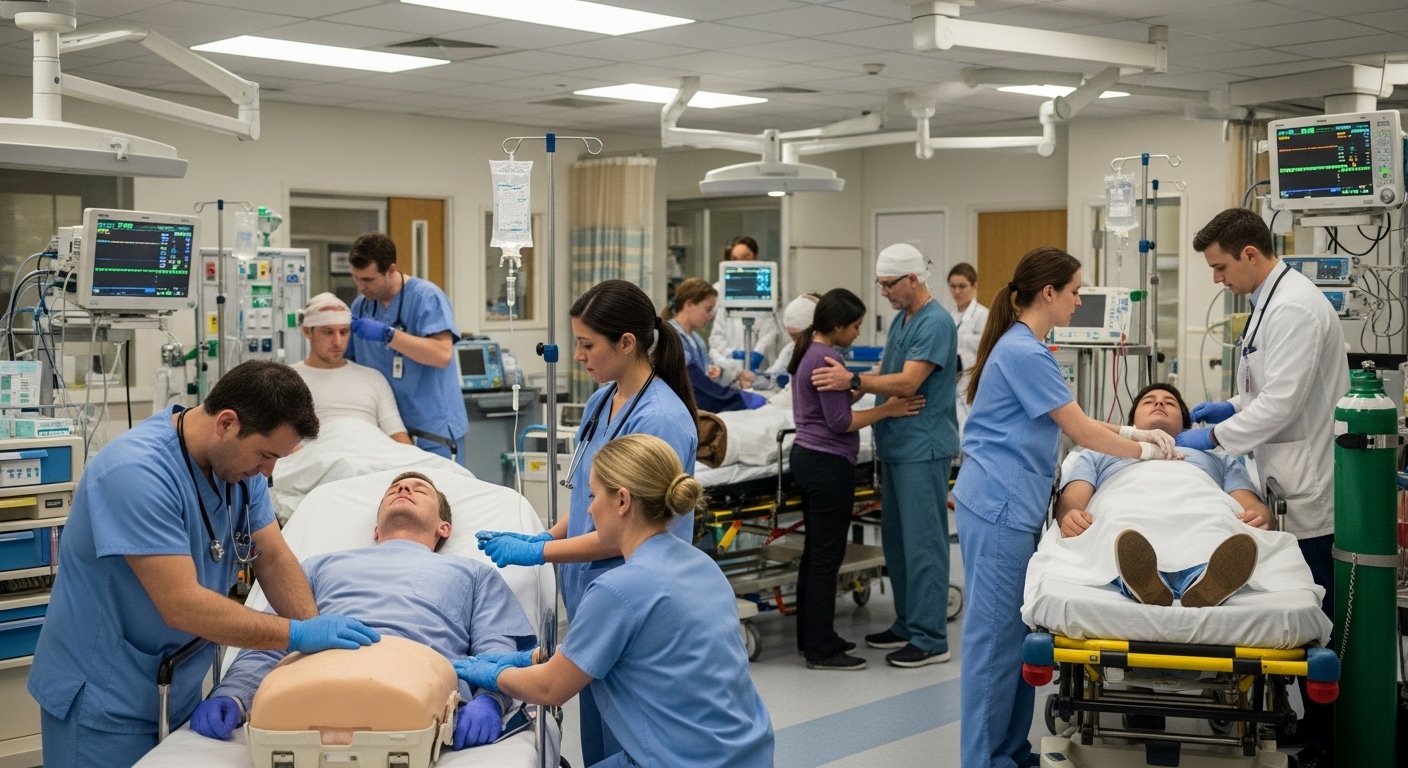

Most people assume medical clinics are not equipped to handle emergencies — and while clinics are not hospitals, they are far from helpless when a patient unexpectedly deteriorates or has a medical crisis. Understanding how clinics recognize and respond to emergencies, what they can manage on-site, and when they transfer patients to emergency rooms helps you understand the safety net your clinic provides. This guide explains emergency preparedness and response in clinic settings.
Clinic Emergency Preparedness
Accredited clinics maintain emergency equipment and trained staff capable of stabilizing patients during an unexpected medical crisis. Standard emergency equipment in clinics includes automated external defibrillators (AEDs) for cardiac arrest, oxygen and airway management supplies, epinephrine auto-injectors for anaphylaxis, blood pressure monitoring, and emergency medications including nitroglycerin and aspirin for cardiac events.
Common In-Clinic Emergencies and Response
Cardiac Arrest
If a patient collapses with cardiac arrest, clinic staff initiate CPR and use the AED while emergency services (911) are called. The goal is to maintain circulation until emergency medical services arrive with advanced resuscitation equipment.
Anaphylaxis
Severe allergic reactions developing during clinic visits (often after a vaccine or medication) are treated immediately with intramuscular epinephrine. The patient is monitored and transferred for emergency observation if needed.
Syncope (Fainting)
The most common in-clinic emergency — managed by positioning the patient, monitoring vital signs, and assessing for underlying causes. Most fainting episodes resolve quickly with position change and monitoring.
Transfer to Emergency Services
When a clinic patient’s condition exceeds what the clinic can safely manage, staff call 911 and stabilize the patient while awaiting emergency medical services. They provide paramedics with the patient’s relevant medical history, medications, and the event details for continuity of care.
Conclusion
While clinics cannot replace hospital emergency departments, they are equipped and trained to recognize emergencies, provide immediate stabilization, and ensure safe transfer to higher-level care when needed. Understanding your clinic’s emergency capabilities is reassuring — know that you are not in an unsafe setting when you visit for routine care.
FAQs – Clinic Medical Emergencies
Q1. Should I go to urgent care or call 911 if I feel I might be having a heart attack?
A: Call 911. Emergency medical services can begin treatment en route and notify the hospital emergency department of your impending arrival, which saves critical time in heart attack management.
Q2. Do clinic staff receive emergency training?
A: Yes. Most clinics require staff to maintain Basic Life Support (BLS) certification. Physicians and nurse practitioners hold Advanced Cardiac Life Support (ACLS) certification.
Q3. What happens to my appointment if I have an emergency during a clinic visit?
A: Your emergency is managed first. Other appointments may be rescheduled. The clinic’s priority in an emergency is your safety.
Q4. Can a clinic legally refuse emergency care?
A: Emergency Medical Treatment and Labor Act (EMTALA) requires hospital emergency departments to provide emergency screening and stabilization regardless of ability to pay. This law does not apply to outpatient clinics, but most clinics provide emergency stabilization as an ethical obligation regardless.
Q5. What is the most common emergency in a medical clinic?
A: Vasovagal syncope (fainting) is the most common clinic emergency — often following blood draws, vaccinations, or anxiety. It is rarely dangerous and typically resolves quickly with proper positioning and monitoring.


