
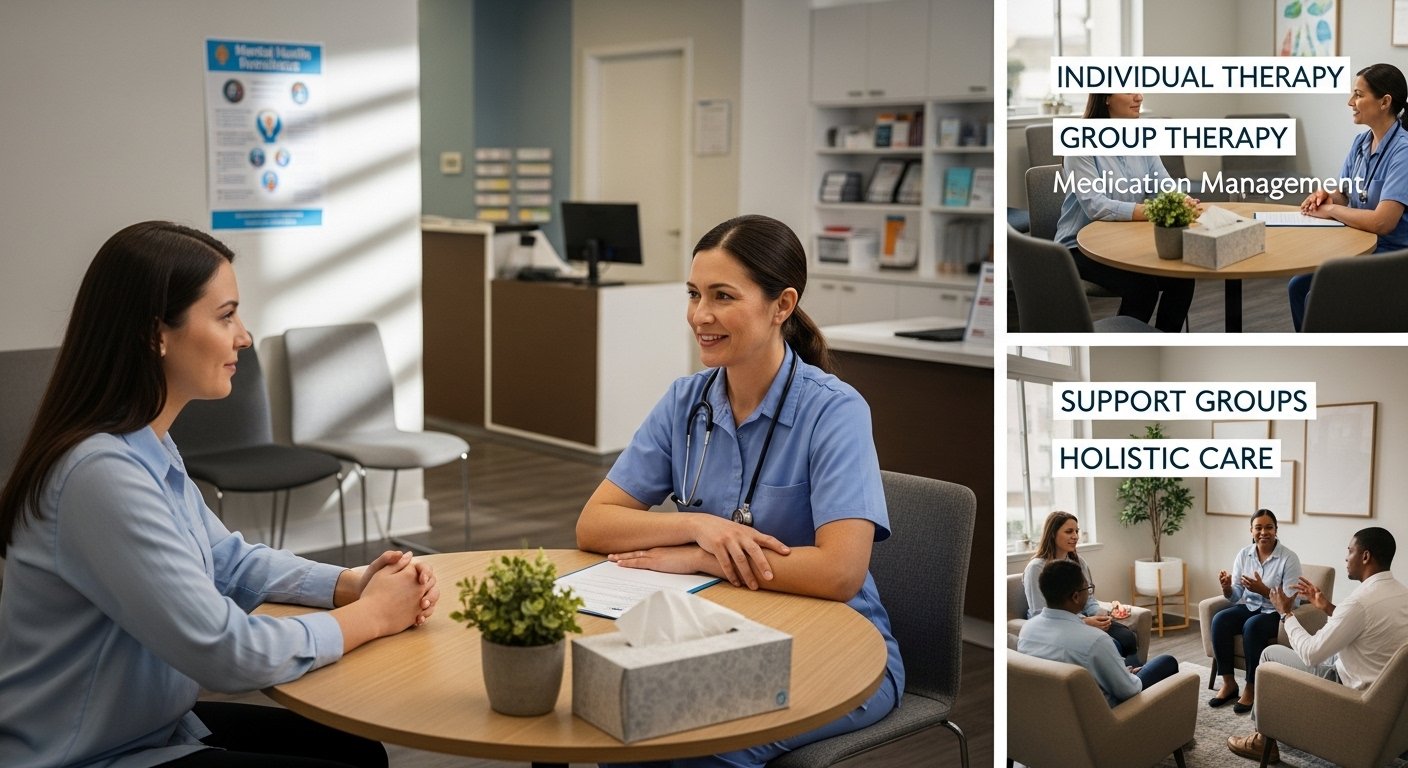

Depression is among the most prevalent and disabling conditions in the world, affecting over 17 million American adults annually. It is far more than persistent sadness — it is a medical condition involving neurobiological changes in brain function that profoundly impairs thinking, sleeping, eating, energy, and the ability to experience pleasure. Medical clinics — both primary care and specialty mental health settings — provide the diagnosis, treatment, and ongoing management that depression requires. This guide explains how clinics support patients with depression.
How Clinics Diagnose Depression
The PHQ-9 (Patient Health Questionnaire-9) is the most widely used screening tool for depression in clinical settings, asking about nine core depression symptoms over the previous two weeks: depressed mood, loss of interest, sleep disturbance, fatigue, appetite changes, feelings of worthlessness, concentration difficulty, psychomotor changes, and thoughts of death or self-harm. A score of 10 or above indicates moderate to severe depression warranting clinical intervention. Your clinic may administer the PHQ-9 routinely or in response to reported symptoms.
Treatment Pathways
Antidepressant Medication
SSRIs (fluoxetine, sertraline, escitalopram) and SNRIs (venlafaxine, duloxetine) are the most commonly prescribed antidepressants — effective for moderate to severe depression with manageable side effect profiles. Antidepressants typically require 4–6 weeks at therapeutic doses to demonstrate full effectiveness. If the first medication is ineffective or poorly tolerated, your doctor will try alternatives — finding the right medication often requires patience and adjustment.
Psychotherapy
CBT is the most evidence-based psychotherapy for depression, helping patients identify and challenge negative thought patterns and develop behavioral strategies to improve mood. Interpersonal therapy (IPT) is another evidence-based approach particularly effective for depression related to grief, role transitions, or relationship problems. For mild to moderate depression, psychotherapy alone is often effective without medication.
Combined Treatment
For moderate to severe depression, combined medication and therapy produces better outcomes than either treatment alone. Your clinic may initiate medication while coordinating a therapy referral.
Conclusion
Depression is not weakness or a character flaw — it is a medical condition that responds to evidence-based treatment. Most patients with depression improve significantly with appropriate care. If you are experiencing depression symptoms, tell your primary care provider or mental health clinic honestly — the PHQ-9 takes 2 minutes, treatment works, and your quality of life can be restored.
FAQs – Depression at the Clinic
Q1. How is depression different from normal sadness?
A: Normal sadness is a temporary emotional response to difficult events. Clinical depression is persistent (lasting most of the day, nearly every day, for at least two weeks), disproportionate to circumstances, and impairs functioning. It involves neurobiological changes beyond normal emotional fluctuation.
Q2. What should I do if I’m having thoughts of suicide?
A: Contact your clinic, call or text 988 (Suicide and Crisis Lifeline), go to an emergency room, or call 911. Suicidal thoughts are a medical emergency deserving immediate attention. You are not alone — effective help is available.
Q3. Can exercise treat depression?
A: Research consistently shows that regular aerobic exercise (30 minutes, 3–5 times per week) significantly reduces depression symptoms — in some studies, as effectively as antidepressant medication for mild to moderate depression. Exercise is a valuable complement to but not substitute for clinical treatment in severe depression.
Q4. Is depression more common in women?
A: Women are diagnosed with depression approximately twice as often as men. This likely reflects both biological differences and the underdiagnosis of depression in men, who are less likely to report emotional symptoms and more likely to present with irritability, substance use, or physical complaints.
Q5. Can depression go away on its own?
A: Some mild depression episodes resolve without treatment. However, untreated depression is associated with longer episodes, higher recurrence risk, worsening severity over time, and increased risk of suicide. Treatment accelerates recovery and reduces recurrence — the benefits far outweigh waiting for spontaneous resolution.


