
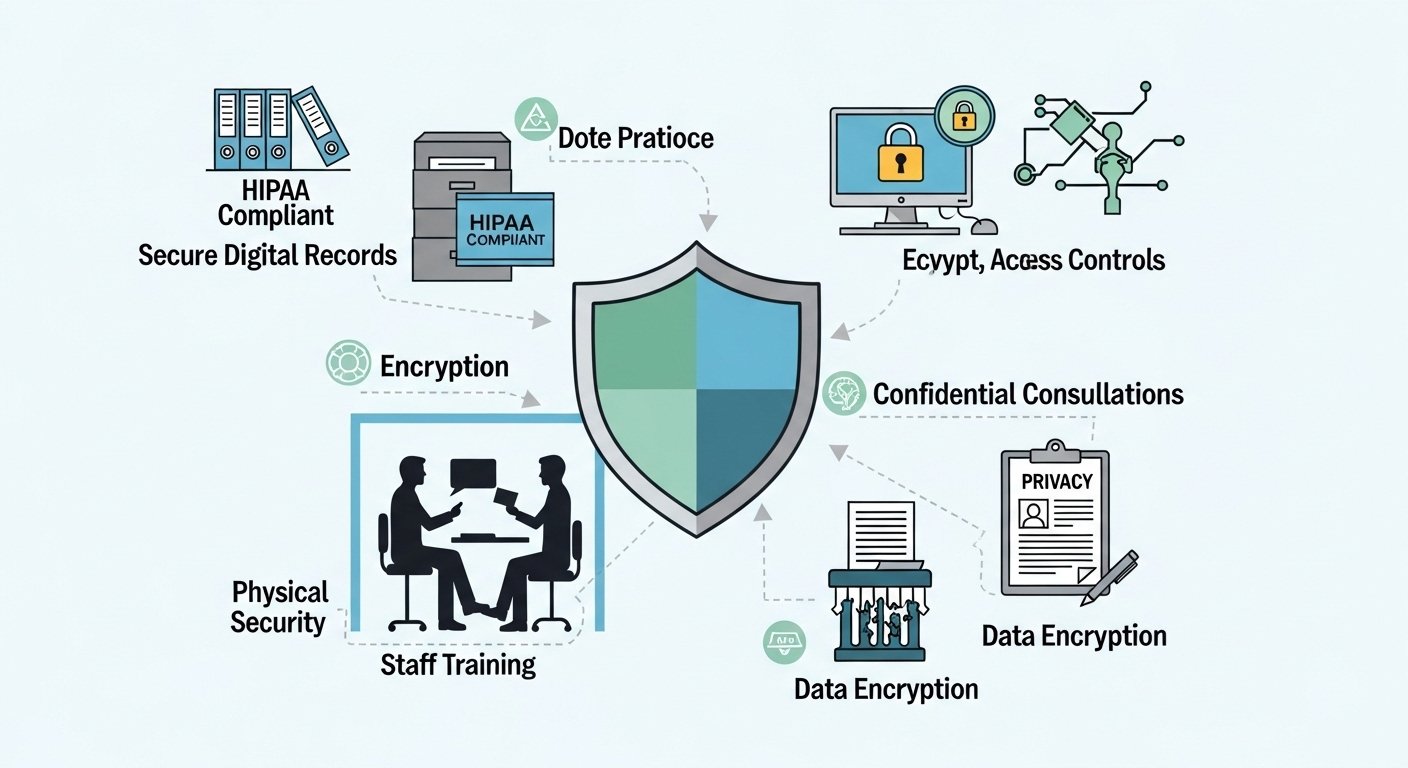

When you visit a medical clinic, you share some of the most personal information in your life — your health conditions, medications, mental health history, and intimate physical details. Understanding how clinics are legally and ethically required to protect this information gives you confidence that your privacy is safeguarded and helps you know your rights when it is not. This guide explains how medical clinics protect patient privacy under federal and ethical standards.
HIPAA: The Foundation of Medical Privacy
The Health Insurance Portability and Accountability Act (HIPAA) is the primary federal law governing the privacy and security of health information in the United States. Under HIPAA, your protected health information (PHI) — any information that identifies you and relates to your health — can only be shared with your authorization or for specific permitted purposes including treatment, payment, and healthcare operations.
Your Rights Under HIPAA
- The right to receive a copy of your medical records
- The right to request corrections to inaccurate records
- The right to know who has accessed your records
- The right to restrict how your information is shared
- The right to receive your clinic’s Notice of Privacy Practices
When Information Can Be Shared Without Your Permission
HIPAA permits sharing your PHI without authorization for treatment (between members of your care team), payment (billing your insurer), required public health reporting (disease surveillance), and certain law enforcement and legal purposes. Your clinic should explain these exceptions in its Notice of Privacy Practices.
Electronic Health Record Security
Clinics using electronic health records (EHRs) must implement technical, administrative, and physical safeguards protecting your digital health information. This includes encrypted data transmission, user authentication, audit logs of who accesses records, and secure storage.
Conclusion
Your health information is protected by robust federal law and ethical standards that clinics are legally obligated to follow. If you believe your privacy rights have been violated, you can file a complaint with the HHS Office for Civil Rights at hhs.gov/ocr. Understanding your rights empowers you to share information openly with your healthcare team, knowing it will be protected appropriately.
FAQs – Medical Privacy at Clinics
Q1. Can my employer find out what I discussed at a clinic?
A: No. Your employer cannot access your medical records without your written authorization (with limited exceptions for occupational health situations). HIPAA strictly prohibits unauthorized disclosure to employers.
Q2. Can my family members access my medical records?
A: Not without your authorization. Clinics require your explicit written permission to share your health information with family members, even spouses. Exceptions exist for parents of minors and designated personal representatives.
Q3. What is a Notice of Privacy Practices?
A: A document clinics are required to provide to new patients explaining how your health information is used and shared, your privacy rights, and how to file a complaint if your rights are violated.
Q4. Can a clinic share my information with my other doctors?
A: Yes. Sharing information between treating providers for the purpose of your care is a permitted use under HIPAA and does not require your separate authorization.
Q5. Are mental health records more protected than other medical records?
A: In many states, mental health and substance use records receive additional legal protection beyond standard HIPAA requirements. Psychotherapy notes, in particular, have stricter disclosure rules.


