
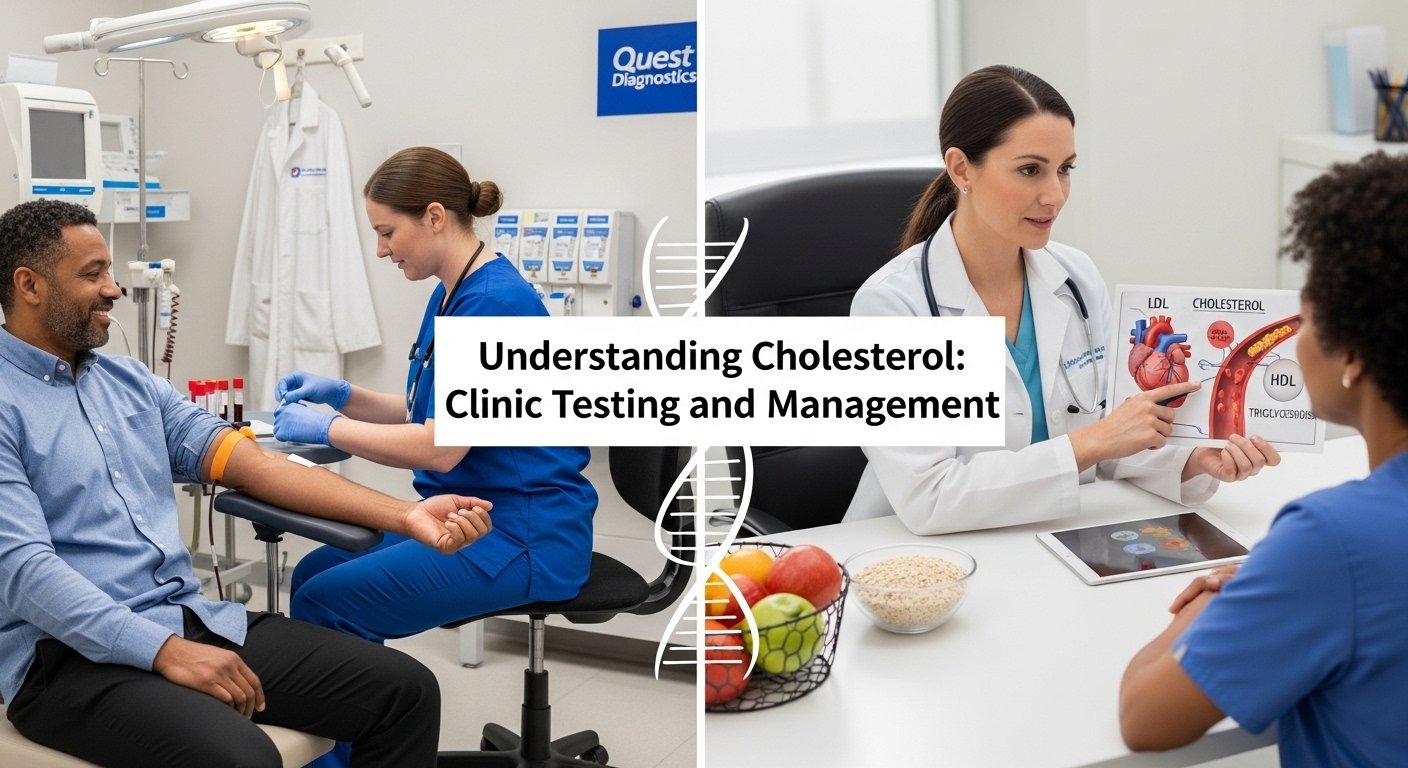

Cholesterol is a waxy substance naturally produced by your liver and obtained from certain foods — essential for cell membrane construction, hormone production, and vitamin D synthesis. However, excess LDL cholesterol in the bloodstream builds up in arterial walls, progressively narrowing them and dramatically increasing the risk of heart attack and stroke. Cholesterol testing and management through your medical clinic is one of the most effective preventive interventions available for reducing cardiovascular disease — the leading cause of death in the United States. This guide explains how clinics test and manage cholesterol.
Understanding Your Lipid Panel Results
A lipid panel measures four components: Total Cholesterol (the combined amount of all cholesterol types), LDL (low-density lipoprotein — “bad” cholesterol that deposits in arteries), HDL (high-density lipoprotein — “good” cholesterol that removes LDL from arteries), and Triglycerides (blood fats linked to diet, alcohol, and metabolic conditions). Optimal values for most adults: LDL below 100 mg/dL (below 70 for very high-risk patients), HDL above 60 mg/dL, triglycerides below 150 mg/dL.
Cardiovascular Risk Assessment
Your clinic does not interpret cholesterol values in isolation but calculates your overall cardiovascular risk — incorporating age, sex, race, blood pressure, diabetes status, and smoking history into validated risk calculators (like the Pooled Cohort Equations) to determine your 10-year risk of a cardiovascular event. This risk-based approach guides whether and how aggressively to treat elevated cholesterol.
Treatment: Lifestyle and Statins
Lifestyle modifications — reducing saturated and trans fats, increasing soluble fiber, regular exercise, weight management, and omega-3 fatty acids — can reduce LDL by 20–30%. When lifestyle changes are insufficient or cardiovascular risk is high, statins (atorvastatin, rosuvastatin, simvastatin) are the cornerstone of lipid-lowering pharmacotherapy — the most studied and proven cholesterol medications available. For very high-risk patients or statin intolerance, additional agents (ezetimibe, PCSK9 inhibitors) provide further LDL reduction.
Conclusion
Cholesterol management is not about a number — it is about reducing your overall cardiovascular risk. Work with your clinic to understand your personal risk profile, make appropriate dietary and lifestyle changes, and use medication when indicated. Treating elevated cholesterol now prevents heart attacks and strokes that would otherwise occur in 10–20 years, when treatment would be far more difficult and expensive.
FAQs – Cholesterol
Q1. How often should I have my cholesterol checked?
A: Adults 20 and older should have a fasting lipid panel every 4–6 years if results are normal. More frequent testing is recommended for patients with known cardiovascular disease, high risk factors, or who are being treated for high cholesterol.
Q2. Do statins cause muscle problems?
A: Mild muscle aches are reported by some statin users. True myopathy (significant muscle damage) is rare. Rhabdomyolysis (severe muscle breakdown) is very rare. If you develop unexplained muscle pain or weakness on a statin, contact your clinic — a different statin or dosage may eliminate the problem.
Q3. Can I lower my cholesterol with diet alone?
A: For mildly elevated LDL, dietary changes (reducing saturated fat, increasing soluble fiber, adding plant sterols) can achieve meaningful reductions. For significantly elevated LDL or high cardiovascular risk, medication is typically needed alongside lifestyle changes.
Q4. Does HDL cholesterol matter?
A: Yes. Higher HDL is associated with lower cardiovascular risk. However, medications that raise HDL without also reducing LDL or inflammation have not been shown to reduce cardiovascular events. HDL is currently more useful as a risk marker than a treatment target.
Q5. Are egg yolks bad for cholesterol?
A: The relationship between dietary cholesterol (eggs) and blood cholesterol is less direct than once thought. Current evidence suggests moderate egg consumption (up to one per day) does not significantly raise cardiovascular risk for most people. Saturated and trans fats have a far greater impact on LDL than dietary cholesterol.


