
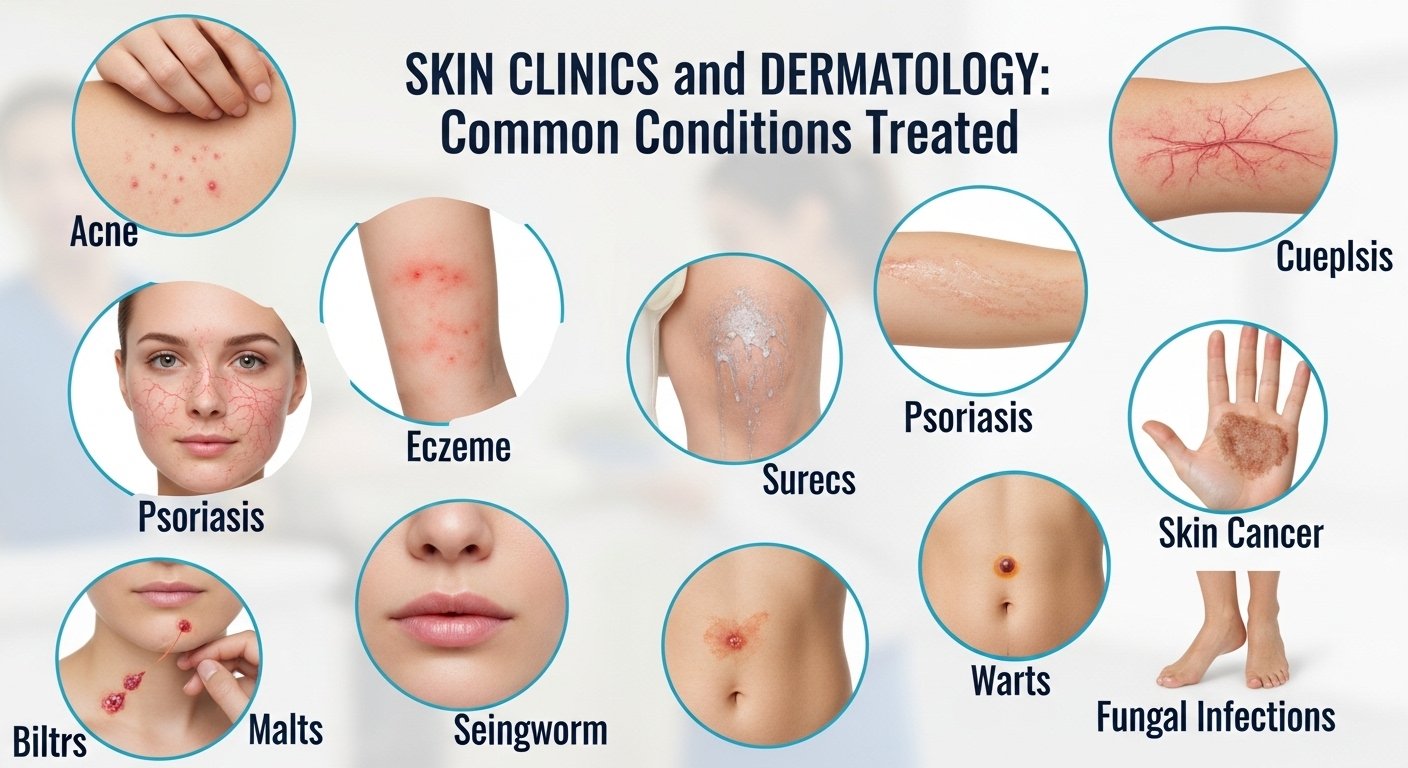

Your skin is your body’s largest organ — a complex, dynamic barrier that protects you from the environment while reflecting your internal health. Dermatology clinics specialize in diagnosing and treating the full spectrum of skin, hair, and nail conditions, from common acne to complex autoimmune skin diseases to skin cancer. Regular dermatological care is an essential component of comprehensive health maintenance. This guide covers what dermatology clinics treat and when to seek specialized skin care.
Common Dermatological Conditions
Acne
Affecting nearly 50 million Americans, acne is the most common skin condition treated by dermatologists. Beyond the over-the-counter treatments available at pharmacies, dermatologists offer prescription topical and oral medications, hormonal treatments, and procedural options (chemical peels, laser therapy) for moderate to severe acne.
Eczema and Psoriasis
These chronic inflammatory skin conditions cause significant discomfort and can profoundly affect quality of life. Modern dermatology offers biologics and targeted therapies that dramatically improve outcomes for patients with moderate to severe disease.
Skin Cancer
Skin cancer — including basal cell carcinoma, squamous cell carcinoma, and melanoma — is the most common cancer in the United States. Annual full-body skin exams by a dermatologist detect suspicious lesions early, when treatment is most effective. Monthly self-examination for new or changing moles complements clinical surveillance.
When to See a Dermatologist
See a dermatologist for a new or changing mole (size, shape, color, or border changes), persistent skin rash not responding to over-the-counter treatment, suspicious growths or lesions, severe acne, hair loss, nail abnormalities, and any skin symptom causing significant concern or discomfort.
Conclusion
Dermatology clinics provide specialized care for conditions that affect both your appearance and your health. Regular skin exams, prompt evaluation of changing lesions, and professional management of chronic skin conditions protect you from preventable complications including skin cancer. Consider an annual dermatology visit as standard health maintenance, particularly if you have a history of sun exposure or a family history of skin cancer.
FAQs – Dermatology Clinics
Q1. How often should I get a skin cancer screening?
A: Once a year for adults with significant sun exposure history or risk factors. Your primary care doctor can perform basic skin checks; a dermatologist provides the most thorough full-body skin examination.
Q2. What is the ABCDE rule for moles?
A: Asymmetry, Border irregularity, Color variation, Diameter greater than 6mm, and Evolution (change over time). Any of these features in a mole warrants prompt dermatological evaluation.
Q3. Can a dermatologist treat hair loss?
A: Yes. Dermatologists treat various forms of alopecia, including androgenetic alopecia (pattern baldness), alopecia areata, and scarring alopecia, using medications, injections, and procedures.
Q4. Is acne treatment covered by insurance?
A: Prescription acne treatment is typically covered by insurance when medically necessary. Cosmetic acne treatments (laser, peels) may not be covered.
Q5. Can I see a dermatologist without a referral?
A: With PPO insurance, typically yes. With HMO insurance, a primary care referral is usually required. Check your specific plan’s requirements.


