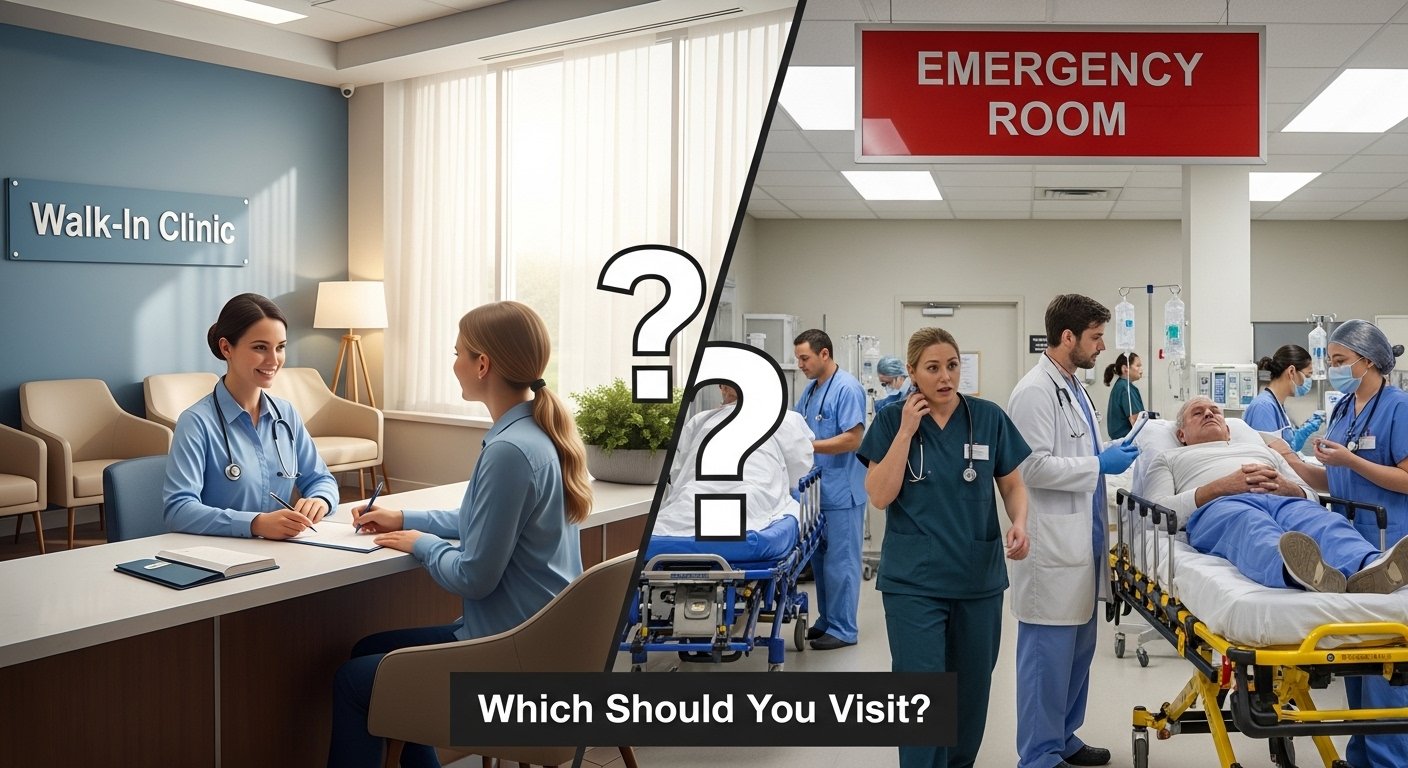

One of the most common — and consequential — healthcare decisions people face is choosing between a walk-in clinic and an emergency room. The choice matters for your health, your time, and your finances. Emergency rooms are designed for life-threatening situations and typically cost significantly more than urgent care or walk-in clinics. Walk-in clinics can handle many common conditions quickly and affordably, but they have real limitations. Knowing the difference helps you make the right choice in the moment.
What Walk-In Clinics Can Treat
Walk-in clinics (including urgent care centers) are well-equipped to handle a broad range of non-life-threatening conditions. These include:
- Cold, flu, and respiratory infections
- Urinary tract infections
- Minor cuts and lacerations requiring stitches
- Sprains, strains, and minor fractures
- Ear infections and sore throats
- Skin rashes and minor burns
- Nausea, vomiting, and diarrhea
- Minor allergic reactions (not anaphylaxis)
Walk-in clinics typically offer on-site X-rays, basic lab testing, and the ability to write prescriptions. Wait times are usually shorter than emergency rooms, and costs are substantially lower.
When to Go to the Emergency Room
The emergency room is the appropriate choice when a condition is potentially life-threatening or requires resources that walk-in clinics cannot provide. Go directly to an emergency room for:
- Chest pain or pressure (possible heart attack)
- Difficulty breathing or shortness of breath
- Signs of stroke (sudden numbness, confusion, speech difficulty, vision changes)
- Severe head injury or loss of consciousness
- Severe abdominal pain
- Uncontrolled bleeding
- Severe allergic reactions (anaphylaxis)
- High fever in an infant under 3 months
- Overdose or poisoning
- Suicidal thoughts or psychiatric emergencies
The Cost Difference
Emergency room visits typically cost several times more than urgent care or walk-in clinic visits. A standard urgent care visit may cost $100–$200 for an uninsured patient; the same condition treated in an emergency room often costs $1,000–$3,000 or more. Even for insured patients, ER copays and deductibles are substantially higher than clinic copays. Choosing a walk-in clinic for non-emergency conditions can save hundreds of dollars without compromising the quality of care you receive.
Conclusion
The rule of thumb is simple: if your condition is potentially life-threatening or requires advanced diagnostic equipment (CT scanner, MRI, cardiac monitoring), go to the emergency room. If your condition is uncomfortable and needs prompt attention but is not life-threatening, a walk-in or urgent care clinic is the faster, less expensive, and equally effective option. When in doubt, call your primary care doctor or a nurse hotline — they can help you determine the right level of care for your situation.
FAQs – Walk-In Clinic vs. Emergency Room
Q1. Is urgent care the same as a walk-in clinic?
A: These terms are often used interchangeably. Urgent care centers are a type of walk-in clinic specifically designed for prompt, non-emergency medical care. Not all walk-in clinics are urgent care centers — some are simply general practice offices that accept same-day appointments.
Q2. Can walk-in clinics do blood tests?
A: Most urgent care clinics perform basic blood tests including complete blood count (CBC), basic metabolic panel, and rapid tests for strep, flu, and COVID-19. Complex or specialized lab work may be sent to an external laboratory.
Q3. What if I go to urgent care and they can’t treat me?
A: If your condition exceeds the clinic’s capabilities, they will stabilize you as needed and direct you to the nearest emergency room, sometimes arranging transportation if the situation warrants it.
Q4. Are walk-in clinics open on weekends and holidays?
A: Most urgent care clinics have extended hours including evenings, weekends, and many holidays. Hours vary by location — check the specific clinic’s website or call ahead to confirm.
Q5. Can a child be treated at a walk-in clinic?
A: Yes. Most walk-in clinics treat patients of all ages, including children. Some urgent care centers have specific pediatric sections. For infants under 3 months with fever or for serious pediatric concerns, a pediatric emergency room is the appropriate choice.