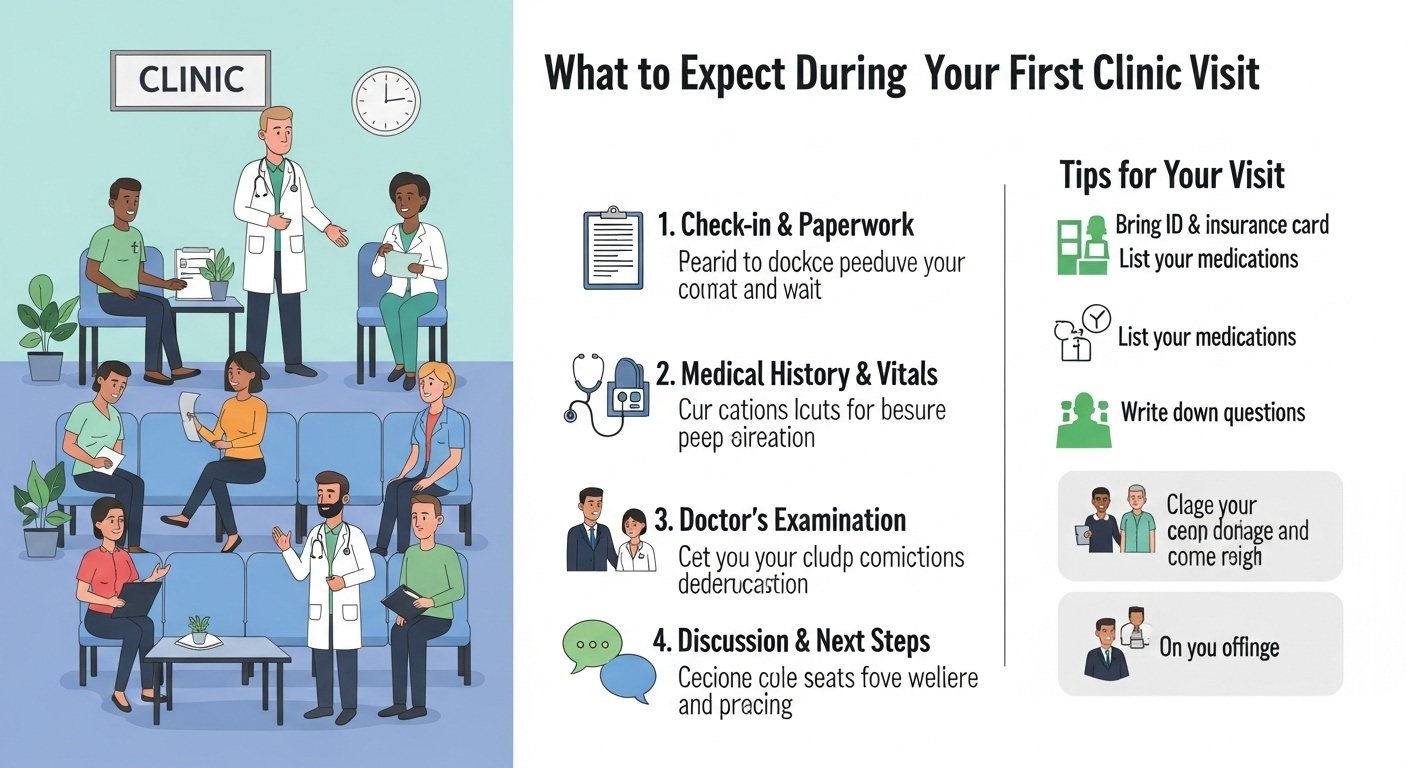

Visiting a medical clinic for the first time — whether it is a new primary care practice or a specialty appointment — can feel unfamiliar and even a little anxiety-inducing. Knowing what to expect removes much of that uncertainty and helps you arrive prepared, relaxed, and ready to get the most out of your appointment. This guide walks you through a typical first clinic visit from check-in to checkout.
Before You Arrive
Most clinics ask new patients to complete paperwork before their first visit — either mailed in advance or available online through a patient portal. Complete these forms thoroughly: they include your medical history, current medications, allergies, insurance information, and emergency contact details. Accurate, complete intake information helps your provider understand your health background before they even enter the room.
Gather documents to bring: your insurance card, a photo ID, your list of current medications with dosages, your immunization records if you have them, and any relevant previous medical records or test results. Arriving 15 minutes early allows time for any remaining check-in paperwork.
Check-In and Waiting
At check-in, a receptionist verifies your personal and insurance information, collects your completed intake forms, and notifies clinical staff of your arrival. You will typically wait briefly in a reception area before being called back. Bring something to read, as waits can vary depending on the clinic’s schedule.
In the Examination Room
Vital Signs
A medical assistant or nurse will take your vital signs: blood pressure, pulse, respiratory rate, temperature, and weight or BMI. These baseline measurements are recorded at every visit and provide important context for your overall health assessment.
Health History Review
The nurse or medical assistant will review your completed intake forms and ask clarifying questions about your symptoms, concerns, and health history. Be honest and thorough — these details directly inform your care.
The Doctor’s Examination
Your provider will review the information gathered, ask their own questions, and perform a physical examination relevant to your chief complaint. For a general physical, this may include listening to your heart and lungs, checking your lymph nodes, abdomen, and reflexes. For a targeted visit, the examination focuses on the specific area of concern.
Discussion and Next Steps
After the examination, your provider discusses their findings, explains any diagnosis or concern, and outlines recommended treatment, lifestyle modifications, or further testing. This is your opportunity to ask every question on your mind — write them down before your visit so you do not forget. Leave with a clear understanding of what was found, what you should do next, and when to follow up.
Conclusion
Your first clinic visit sets the foundation for your ongoing healthcare relationship. Coming prepared with documents and questions, engaging actively with your provider, and leaving with a clear plan makes the experience both more comfortable and more productive. The more invested you are in your own care, the better your health outcomes will be over time.
FAQs – First Clinic Visit
Q1. How long does a first clinic visit usually take?
A: Allow one to two hours for a new patient appointment, including paperwork, waiting, and the appointment itself. Follow-up visits are typically shorter — 20 to 40 minutes.
Q2. What should I wear to a medical clinic appointment?
A: Wear comfortable, easily removable clothing. If you are having a specific body part examined — a knee, shoulder, or skin condition — wear or bring clothing that allows easy access to that area.
Q3. Can I bring someone with me to my clinic appointment?
A: Yes. Bringing a trusted support person is always appropriate. They can help you remember information, take notes, and advocate for your needs during the appointment.
Q4. Should I fast before my first clinic appointment?
A: Only if your doctor specifically requests it — usually for blood tests that require fasting. Unless you have been instructed to fast, eat and drink normally and take any regular medications as usual.
Q5. What if I forget to mention something important during my appointment?
A: Call the clinic after your appointment — most clinics have a nurse hotline for follow-up questions. For non-urgent items, you can also use the patient portal to send a message to your provider.