
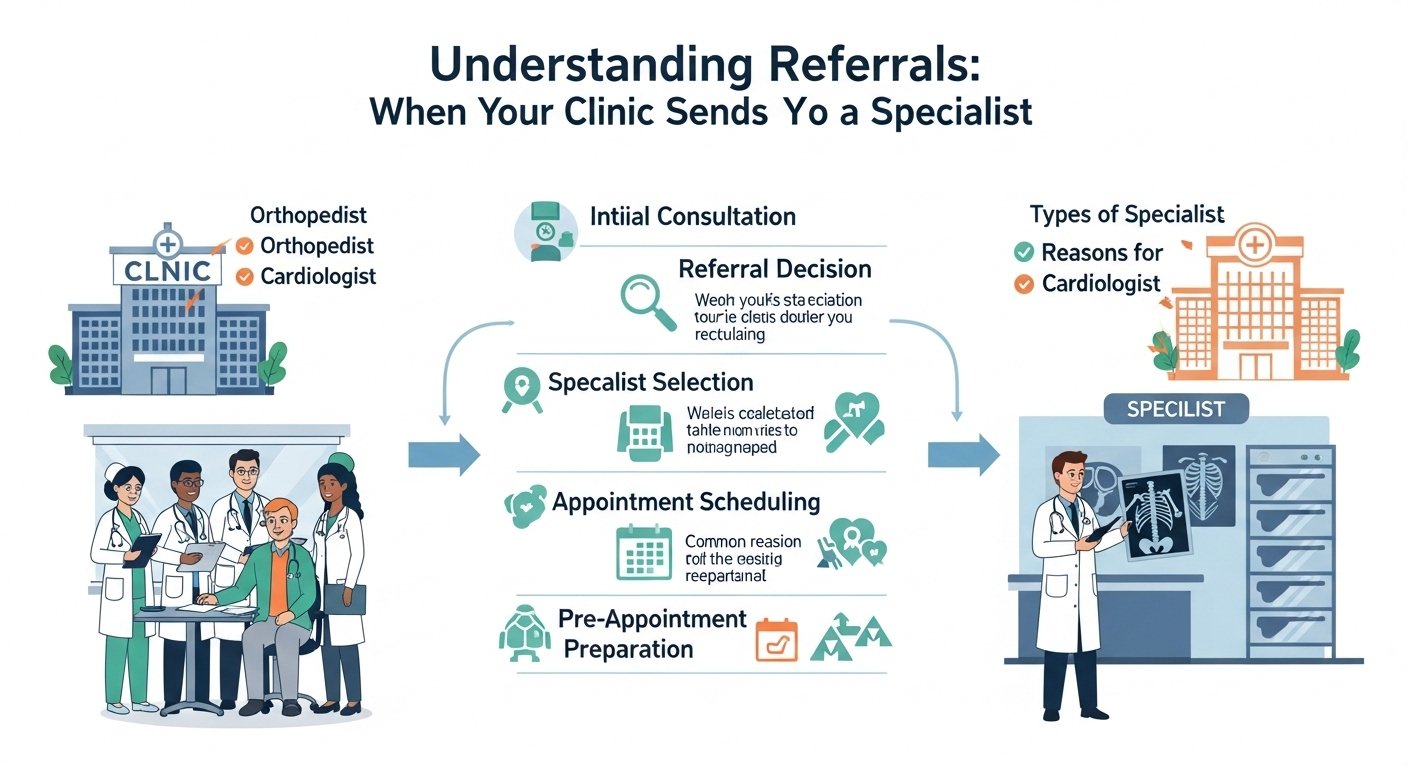

A referral from your primary care clinic to a specialist is a common and often misunderstood part of the healthcare process. Patients sometimes feel dismissed when referred — as if their doctor is passing them off. In reality, a referral is a sign of good care: your primary care provider has identified that your concern requires expertise beyond their scope and is connecting you with the right specialist for your specific need. This guide explains how the referral process works and how to navigate it effectively.
Why Referrals Happen
Referrals occur when a patient’s condition requires diagnostic capabilities, procedural skills, or specialized medical management beyond primary care. Common reasons for referral include suspected heart disease (to a cardiologist), complex skin conditions (to a dermatologist), gastrointestinal concerns (to a gastroenterologist), orthopedic injuries (to an orthopedic surgeon), and mental health conditions requiring specialized psychiatric management.
The Referral Process
Your primary care provider completes a referral — communicating your relevant medical history, the specific reason for referral, and any test results pertinent to the specialist. If your insurance requires prior authorization for specialist visits, your clinic typically handles this process. You then contact the specialist’s office to schedule an appointment, sometimes with your clinic’s assistance.
Getting the Most from Your Specialist Visit
Bring your primary care records and any relevant test results to your specialist appointment. Understand why you were referred and what question your primary care doctor wants the specialist to answer. After your specialist visit, ensure that their findings and recommendations are communicated back to your primary care clinic — this closes the loop and ensures coordinated care.
Conclusion
Referrals are a normal, important part of coordinated healthcare. Follow up on referrals promptly — delays in specialty care sometimes allow conditions to progress unnecessarily. Communicate actively between your primary care clinic and specialty provider, and ensure your primary care doctor receives the specialist’s report. Effective referral management is part of taking an active, informed role in your own healthcare.
FAQs – Medical Referrals
Q1. Do I have to use the specific specialist my doctor refers me to?
A: No. Your doctor’s referral is a recommendation. You can choose any in-network specialist, though your doctor’s recommended specialist may be the most appropriate choice for your specific condition.
Q2. How long does a referral take?
A: Non-urgent referrals may have appointment waits of weeks to months depending on specialist availability. Urgent referrals are typically expedited. If you have not heard from the specialist’s office within a week, call both the specialist’s office and your primary care clinic.
Q3. Will my insurance cover the specialist visit?
A: Most insurance plans cover specialist visits that are medically necessary and in-network. Prior authorization may be required — your clinic will typically obtain this before the appointment.
Q4. Can I self-refer to a specialist?
A: With PPO insurance, typically yes. With HMO insurance, a primary care referral is usually required. Self-referral without understanding your specialist’s approach to your condition can lead to a less coordinated experience.
Q5. What if the specialist recommends something my primary doctor didn’t mention?
A: Discuss the specialist’s recommendations with your primary care doctor. They can help you understand the recommendation in the context of your full health picture and coordinate the recommended care.


