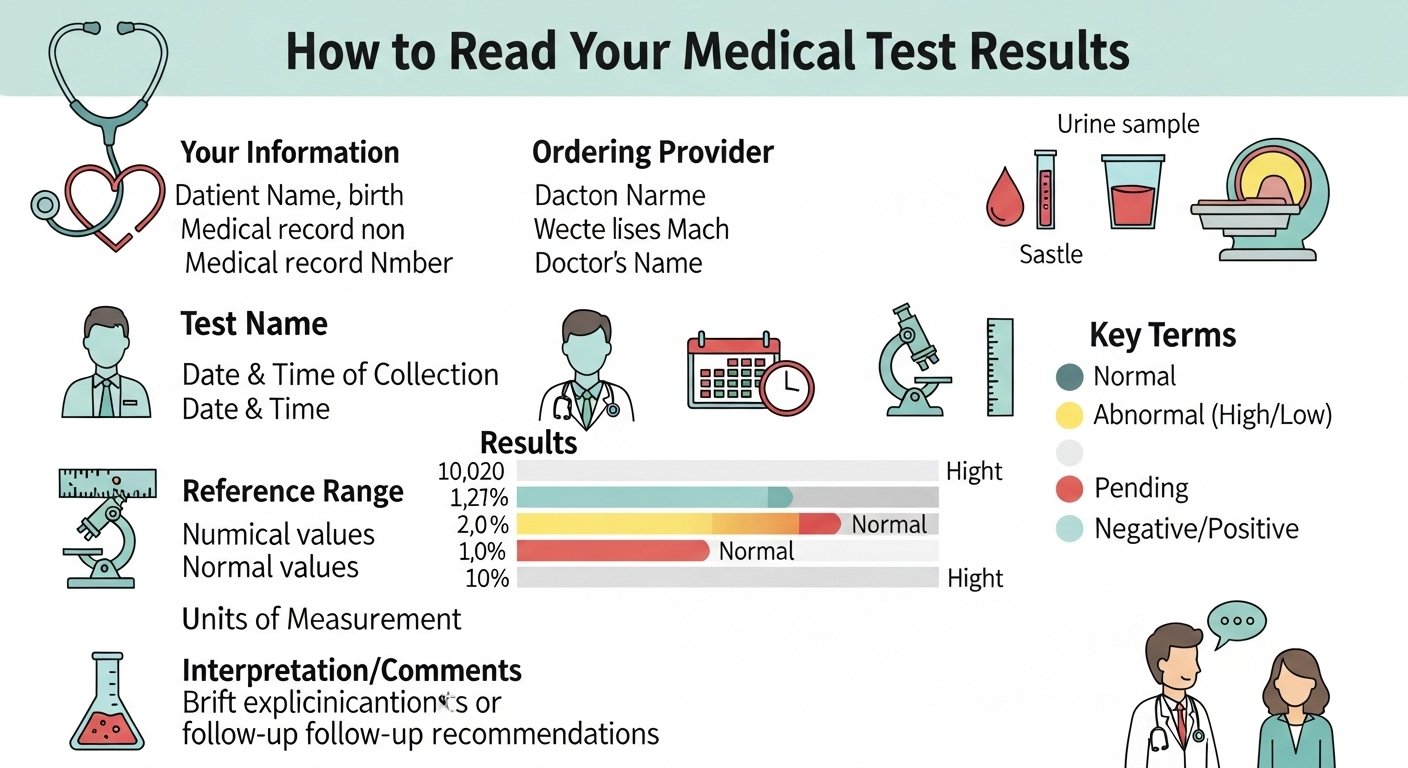

Receiving medical test results — whether through a patient portal, a letter, or a phone call — can be confusing and anxiety-inducing. Numbers outside the reference range, cryptic abbreviations, and unfamiliar terminology can leave patients more confused after receiving results than before. Understanding how to read and interpret your medical test results reduces anxiety, helps you have more productive conversations with your doctor, and empowers you to be an active participant in your own healthcare decisions.
Understanding Reference Ranges
Most lab results include a reference range — the values considered normal for a healthy adult population. Your result is then shown alongside this range, typically with an indicator (H for high, L for low, or an asterisk) when your value falls outside the normal range. Reference ranges are statistical constructs based on the central 95% of a healthy population — meaning 5% of healthy people have values outside the “normal” range. A value slightly outside the reference range does not automatically mean something is wrong; context matters enormously.
Common Blood Tests and What They Measure
Complete Blood Count (CBC)
The CBC measures your red blood cells (carrying oxygen), white blood cells (fighting infection), hemoglobin (the oxygen-carrying protein in red blood cells), hematocrit (the proportion of red cells in your blood), and platelets (involved in clotting). Abnormal values can indicate anemia, infection, immune disorders, or clotting problems.
Basic Metabolic Panel (BMP)
This panel measures electrolytes (sodium, potassium, chloride, bicarbonate), kidney function markers (creatinine, BUN), and blood glucose. It gives your doctor a snapshot of your body’s chemistry and the health of key organ systems.
Lipid Panel
The lipid panel measures total cholesterol, LDL (“bad”) cholesterol, HDL (“good”) cholesterol, and triglycerides. These values assess cardiovascular risk. Ideal levels vary based on your overall cardiovascular risk profile — your doctor interprets these in context.
When to Ask Your Doctor for Clarification
Always ask your doctor to explain any abnormal result in plain language. Ask specifically: what does this result mean for my health? Is it clinically significant? Does anything need to be done? When should it be rechecked? The goal is to leave every result review with a clear understanding of what the finding means and what the next step is — not just whether a number is in or out of the “normal” range.
Conclusion
Reading medical test results effectively requires understanding reference ranges as statistical guidelines rather than absolute cutoffs, recognizing the most common tests and what they measure, and asking your doctor clear questions about any result that concerns you. Patient portals now deliver results directly to you — use this access as a tool for informed engagement with your care, not a source of unnecessary anxiety before you have had a chance to discuss the results with your provider.
FAQs – Reading Medical Test Results
Q1. Should I look up my results online before talking to my doctor?
A: You can, but approach online interpretation with caution. Medical information sites vary in quality, and interpreting a single value without clinical context can produce unnecessary anxiety. Use online resources to build vocabulary, then discuss meaning and implications with your doctor.
Q2. What does it mean if my result is flagged as “critical”?
A: A critical value is a result so far outside the normal range that it may indicate an immediately life-threatening condition. Labs are required to report critical values directly to your clinician immediately for prompt follow-up.
Q3. Can test results change from day to day?
A: Yes. Many lab values are influenced by factors like diet, hydration, medications, stress, and time of day. A single abnormal result often needs to be repeated before clinical conclusions can be drawn.
Q4. Are all test results reported to patients through the portal?
A: Most are, though some clinics prefer to communicate abnormal results through a phone call or appointment rather than simply posting them in the portal without context.
Q5. What is a “normal” result?
A: “Normal” in laboratory medicine means within the statistical range found in 95% of the healthy reference population. It does not mean “perfect” or “no risk” — it means within the typical range for people without known disease.