
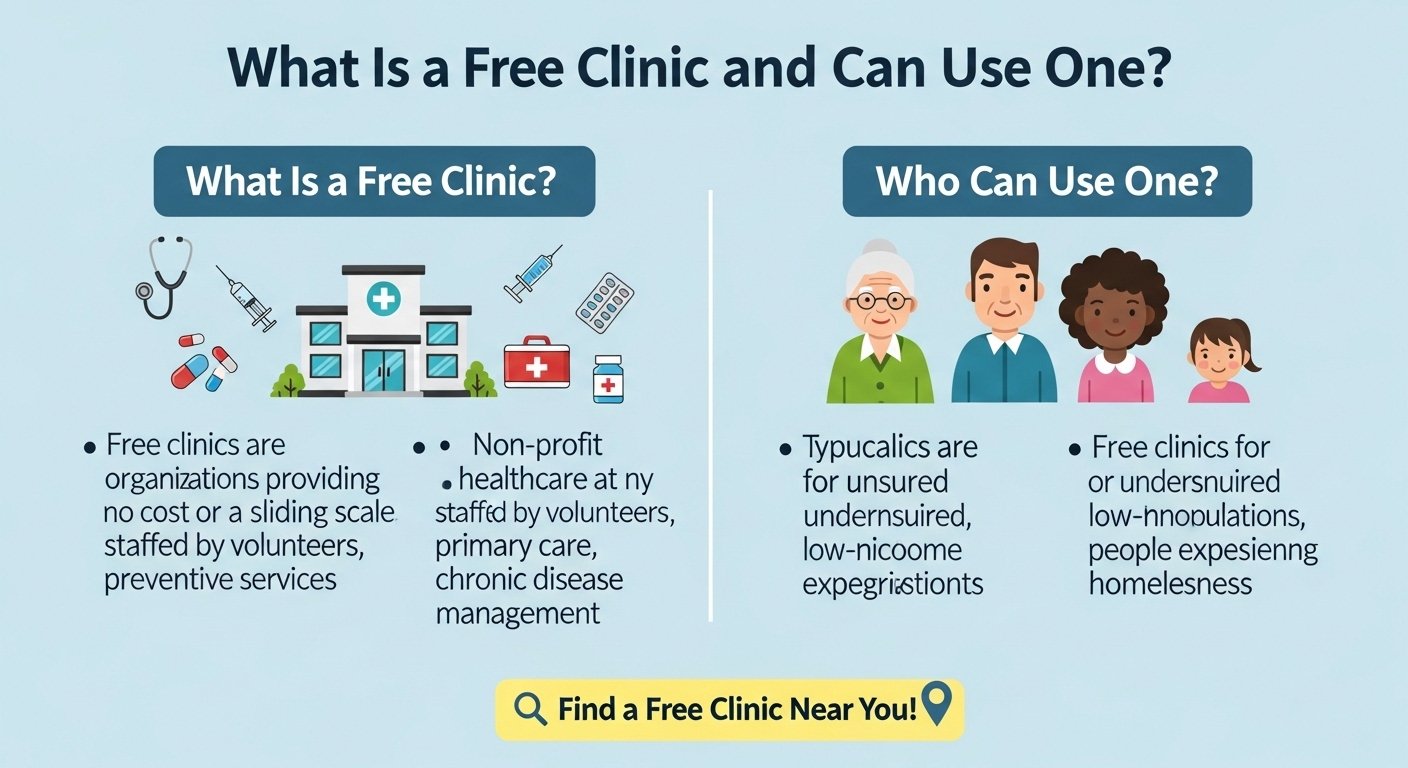

Free clinics are nonprofit healthcare facilities that provide medical, dental, and mental health services at no charge to patients who are uninsured, underinsured, or otherwise unable to afford medical care. Staffed primarily by volunteer healthcare professionals — physicians, nurses, dentists, and pharmacists — free clinics are a remarkable expression of the healthcare community’s commitment to service beyond the commercial healthcare system. This guide explains what free clinics are, what they provide, and who can access their services.
How Free Clinics Operate
Free clinics operate on donated time and resources. Volunteer physicians and nurses provide clinical care during clinic hours. Medications are often donated by pharmaceutical companies or obtained at reduced cost through the 340B Drug Pricing Program. Supplies are donated by medical suppliers and community supporters. Operating costs are funded through private donations, grants, and community fundraising.
Services Typically Provided
- Primary care visits for acute and chronic conditions
- Prescription medications at no or low cost
- Basic laboratory testing
- Dental care (at clinics with dental volunteer programs)
- Mental health counseling
- Health education and disease management support
- Referral to specialist care through volunteer specialist partnerships
Who Can Use a Free Clinic
Free clinics primarily serve uninsured individuals and families, but many also serve underinsured patients whose insurance coverage leaves significant gaps. Income verification may be required at some clinics; others serve all who present without documentation requirements. Immigration status is typically not a barrier. Find your nearest free clinic through the National Association of Free and Charitable Clinics (nafcclinics.org) or by calling 211.
Conclusion
Free clinics represent one of the most powerful expressions of community health care — providing dignified, professional medical care to those who need it most, entirely through the generosity of volunteer providers and community supporters. If you or someone you know needs healthcare without the ability to pay, a free clinic or FQHC can provide the care you need without financial barriers.
FAQs – Free Clinics
Q1. Is care at a free clinic as good as at a regular clinic?
A: Yes. Volunteer physicians at free clinics are fully licensed, experienced practitioners donating their time. The quality of clinical judgment and medical expertise is equivalent to private-practice care.
Q2. Do free clinics prescribe medications?
A: Yes. Many free clinics have partnerships with pharmaceutical companies and dispensary programs that provide common medications at no cost to patients.
Q3. Are free clinics confidential?
A: Yes. Free clinics maintain patient confidentiality under HIPAA, just as any other healthcare provider.
Q4. How do I find a free clinic near me?
A: Visit nafcclinics.org, findahealthcenter.hrsa.gov, or call 211 (the community information helpline) for referrals to free and low-cost healthcare in your area.
Q5. Can I volunteer at a free clinic?
A: Yes. Free clinics welcome volunteers — healthcare professionals to provide clinical services, and community members to assist with administration, translation, patient transport, and fundraising.


